
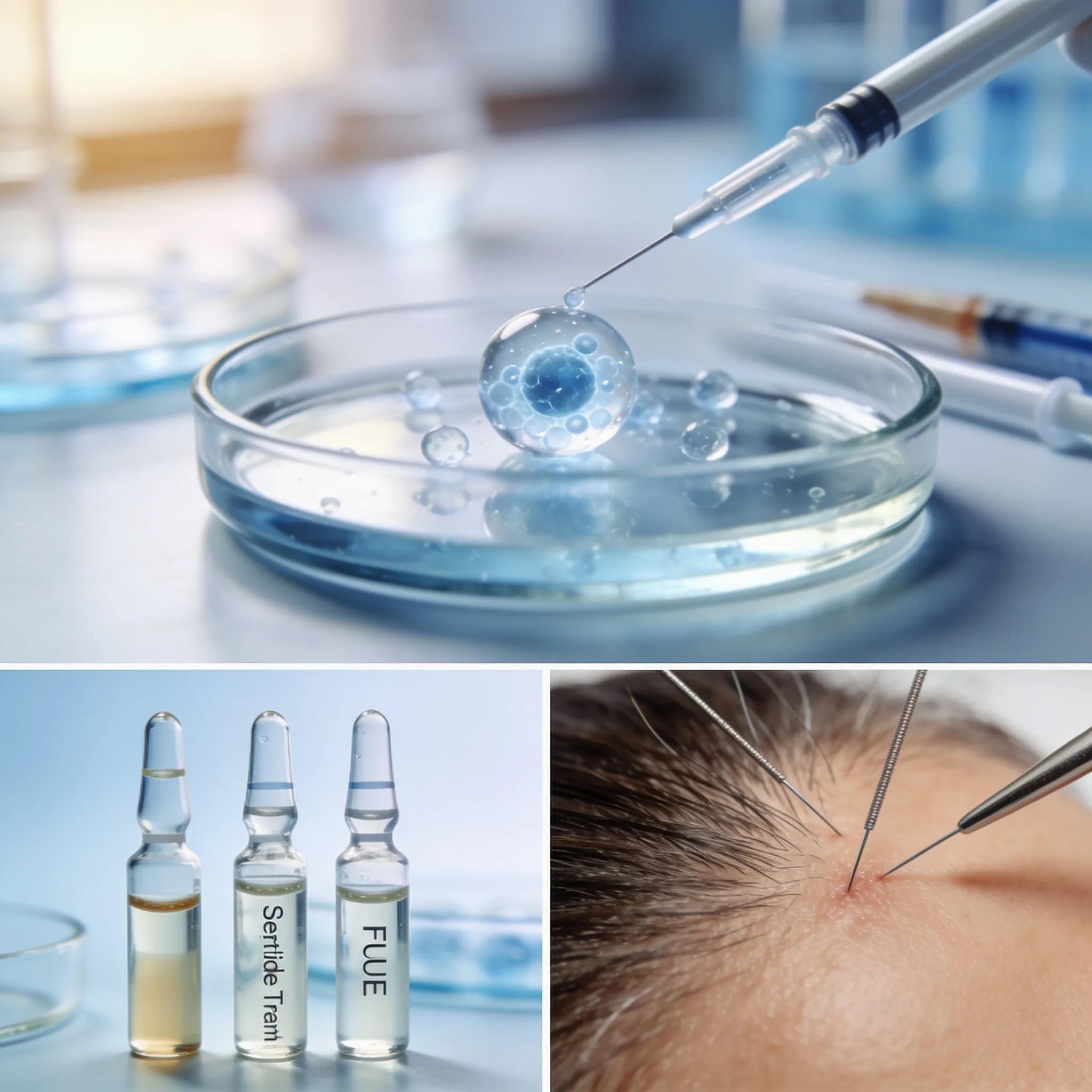
The Stem 3 Protocol Explained: Muse Cells and Micro-FUE Hair Restoration
Medically reviewed by Dr. Charles Pereyra, MD — Medical Director, Springs Rejuvenation. Last reviewed October 21, 2026.
Written by the Springs Rejuvenation regenerative medicine team from direct clinical experience administering stem cell and exosome protocols at our Aventura, Miami center.
Hair restoration has evolved beyond traditional transplant methods. While conventional approaches move existing hair from one area to another, newer protocols aim to support the follicular environment itself. The Stem 3 Protocol represents a three-component approach that combines ultra-precise follicular unit extraction with regenerative support from Muse cells and exosomes. Understanding what each component contributes—and what remains investigational—helps prospective patients make informed decisions about candidacy.
No competing clinic currently offers this specific combination of 0.9 mm micro-FUE harvesting, Muse cell delivery, and exosome support as a unified protocol. Most practices use either traditional FUE grafting alone or add platelet-rich plasma as an adjunct. The Stem 3 Protocol integrates three distinct interventions based on published mechanisms in the regenerative medicine literature, though long-term hair-specific outcomes remain under investigation.
What Makes the Stem 3 Protocol Different
The Stem 3 Protocol derives its name from three pillars: precision micro-FUE, Muse cell administration, and exosome delivery. Each component addresses a different aspect of the follicular environment. Micro-FUE with 0.9 mm punches reduces visible scarring at donor sites compared to 1.0-1.2 mm tools commonly used in standard procedures. Muse cells, a subset of pluripotent-like cells identified by Kuroda, Dezawa and colleagues in 2010, are delivered intravenously to potentially support tissue repair processes. Exosomes—extracellular vesicles that carry signaling molecules—are applied to both donor and recipient areas as a third layer of support.
This combination reflects an effort to address multiple variables that influence graft survival and follicular health. Traditional FUE focuses solely on moving follicles from areas of density to areas of thinness. The Stem 3 Protocol adds two regenerative components, though their specific contribution to hair outcomes has not been validated in large controlled trials. The rationale comes from published studies in other tissue types, extrapolated to the scalp.
Understanding Muse Cells: The Science Behind the Stem 3 Protocol Hair Approach
Muse cells—multilineage-differentiating stress-enduring cells—are a distinct population identified by the presence of the SSEA-3 surface marker. Wakao, Dezawa and colleagues characterized these cells in a 2011 publication, demonstrating that they can be isolated from adult human tissues including bone marrow and adipose tissue. Unlike bulk mesenchymal stem cells, Muse cells exhibit stress tolerance and have the capacity to differentiate into multiple lineage types under certain conditions. They exist in very small numbers within the adult body.
The mechanism by which intravenously delivered cells might reach injured or stressed tissue was explored by Yamada and colleagues in 2018. Their work identified the S1P–S1PR2 signaling axis as a homing mechanism in an acute tissue injury model. Cells expressing the appropriate receptor migrated toward areas with elevated sphingosine-1-phosphate, a damage signal. This study was conducted in a controlled laboratory setting; whether the same mechanism operates in human scalp tissue experiencing androgenetic alopecia or other forms of hair loss has not been demonstrated.
A first-in-human Japanese safety study by Noda and colleagues in 2020 evaluated intravenously delivered Muse cells in a clinical context. The trial established a safety profile but was not designed to test efficacy across multiple conditions. A subsequent randomized, double-blind trial in Japan led by Niizuma and colleagues in 2023 examined outcomes in a different clinical setting; the primary endpoint showed modest benefit, illustrating that responses vary and not every study yields strongly positive results.
These published investigations inform the rationale for including Muse cells in the Stem 3 Protocol, but none of them assessed hair regrowth or follicular survival as an outcome measure. The application to hair restoration remains investigational.
The Three Components of the Stem 3 Protocol
The first component is 0.9 mm micro-FUE, which refers to the diameter of the circular punch used to extract individual follicular units from the donor area. Standard FUE employs 1.0 to 1.2 mm punches; reducing the size to 0.9 mm creates a smaller wound and theoretically results in less visible scarring. This requires greater surgical precision and limits the procedure to experienced practitioners. Dr. Charles Pereyra, a board-certified emergency medicine physician who performs these procedures, uses magnification and fine instrumentation to minimize trauma at the donor site while preserving graft quality.
The second component is intravenous Muse cell administration. Cells meeting the SSEA-3+ marker criteria are prepared and delivered systemically rather than injected directly into the scalp. The hypothesis is that these cells may migrate to areas of tissue stress or inflammation, including hair follicles undergoing miniaturization. Published animal models and early-phase human trials support the safety of systemic administration, but there is no peer-reviewed evidence that this approach enhances hair density or graft survival in humans. Patients receive this component under physician supervision with appropriate medical monitoring.
The third component involves exosomes, which are nanometer-scale vesicles secreted by cells. These vesicles contain proteins, lipids, and nucleic acids that can influence nearby cells. A systematic review by Gentile and Garcovich in 2019 examined regenerative approaches for androgenetic alopecia, including platelet-rich plasma and conditioned media from adipose-derived stem cells. Shin and colleagues reported in 2015 on the use of adipose-derived stem cell conditioned media in a small pilot study, finding preliminary signals of benefit. Exosomes represent one component of such conditioned media. In the Stem 3 Protocol, exosomes are applied topically and via micro-needling to donor and recipient zones, with the goal of providing a supportive signaling environment during the healing phase.
No single component is claimed to work in isolation. The protocol's design assumes that combining precision extraction, systemic regenerative cell delivery, and local signaling support may improve outcomes compared to FUE alone. This hypothesis has not been tested in a controlled trial specific to the Stem 3 Protocol.
Physician-Led Candidacy Screening and Who Is NOT a Candidate
Not everyone is a suitable candidate for the Stem 3 Protocol. Dr. Charles Pereyra, MD conducts an initial screening that includes medical history review, examination of donor and recipient areas, and in some cases imaging or laboratory work to assess overall health status. The goal is to identify individuals whose hair loss pattern, donor density, and general health make them reasonable candidates, while declining those who are unlikely to benefit or who face elevated risk.
Individuals with insufficient donor hair density are generally not good candidates for any FUE procedure, including the Stem 3 Protocol. If the donor area has already been extensively harvested or if diffuse thinning affects the entire scalp, there may not be enough viable follicles to redistribute. Similarly, patients with active scalp infections, uncontrolled inflammatory conditions, or certain dermatologic disorders may be advised to address those issues before considering elective hair restoration.
Expectations play a critical role in candidacy. Patients seeking certain outcomes or those who expect dramatic density increase within weeks are not appropriate candidates. Dr. Pereyra discusses the investigational nature of the Muse cell and exosome components, the variability in individual response, and realistic timelines for any visible change. Candidates who proceed understand that graft survival and new growth occur over months, not days, and that no therapy has certain outcomes.
Age alone is not an exclusion, but very young patients with rapidly progressive androgenetic alopecia may be counseled to wait, as their hair loss pattern has not yet stabilized. Conversely, older patients with realistic expectations and good donor reserves may be excellent candidates. The screening process is designed to match each individual's clinical picture with the risks and potential benefits of a multi-component intervention.
What the Evidence Shows—and What It Doesn't
The published literature provides a foundation for each component of the Stem 3 Protocol, but gaps remain. Micro-FUE as a surgical technique has observational support for reduced scarring and patient satisfaction, though head-to-head comparisons of 0.9 mm versus 1.0 mm punches in randomized trials are limited. Surgeons report anecdotal success, but systematic data on long-term graft survival as a function of punch size is sparse.
For Muse cells, the evidence base includes safety data from early-phase human trials (Noda and colleagues, 2020; Niizuma and colleagues, 2023) and mechanistic studies in animal models (Yamada and colleagues, 2018). These investigations establish biological plausibility and short-term safety, but none assessed hair growth as an endpoint. Extrapolating from studies in different tissue types to the scalp is a logical hypothesis, not a proven clinical benefit. Hare and colleagues in 2009 demonstrated the safety of intravenous allogeneic mesenchymal stem cells in a randomized trial, and Bartolucci and colleagues in 2017 (the RIMECARD study) reported functional improvements in a different clinical context. These studies inform the safety profile but do not provide direct evidence for hair restoration.
Exosomes have been studied in the context of wound healing and tissue repair. The small pilot by Shin and colleagues (2015) using adipose-derived stem cell conditioned media included exosomes among other factors and reported preliminary positive signals. Larger, blinded, controlled trials are needed to isolate the effect of exosomes from placebo or from the natural healing process after micro-trauma. Current evidence is early-stage and does not yet meet the threshold for definitive efficacy claims.
What the evidence does NOT show is that the Stem 3 Protocol as a unified intervention produces superior long-term hair density compared to FUE alone, nor is there data on how often the protocol succeeds versus fails. Individual responses vary widely. Some patients may experience robust graft survival and visible improvement; others may see minimal change. The protocol is offered as an investigational approach based on mechanistic rationale, not as a proven standard of care.
Recovery Timeline and What to Expect
Recovery from the Stem 3 Protocol follows a timeline similar to standard FUE, with some additional considerations due to the systemic and topical regenerative components. Immediately after the procedure, patients typically experience swelling, redness, and pinpoint crusting at the donor and recipient sites. These acute effects usually subside within seven to ten days. Strenuous activity and direct sun exposure are restricted during the first two weeks to minimize the risk of graft displacement or infection.
Transplanted follicles often enter a resting phase and may shed within the first month. This is a normal physiological response and does not indicate failure. New growth from transplanted follicles typically begins to appear between three and four months post-procedure, with continued gradual improvement over the following six to twelve months. Final density and texture become more apparent after one year, though some patients report ongoing subtle changes beyond that timeframe.
The Muse cell and exosome components may influence the pace and quality of healing, but specific timelines for their effect have not been characterized in published studies. Patients are monitored at regular intervals to assess graft survival, detect any complications, and manage expectations. Dr. Charles Pereyra reviews progress at each follow-up visit, adjusting care as needed and providing guidance on hair care practices that support long-term results.
No two patients experience identical recovery. Factors such as age, baseline health, scalp elasticity, and adherence to post-procedure instructions all play a role. The investigational nature of the protocol means that some outcomes may differ from what limited early data suggest. Transparency about this variability is a central part of the informed consent process.
Physician-Supervised Therapy Without Traveling Overseas
For many years, patients interested in advanced regenerative approaches for hair restoration felt compelled to seek care in clinics outside the United States, particularly in countries where regulatory frameworks differ. The availability of physician-supervised Muse cell therapy in the US represents a shift. Patients no longer need to coordinate international travel, navigate unfamiliar medical systems, or manage follow-up care from a distance.
Dr. Pereyra's practice offers the Stem 3 Protocol under a framework that prioritizes safety, informed consent, and realistic communication about what is known and unknown. The procedure takes place in a clinical setting with appropriate medical oversight. Post-procedure support is accessible, and any concerns can be addressed promptly without the logistical challenges of cross-border care.
This does not imply that the protocol is a proven superior alternative to traditional methods. It reflects a commitment to making investigational regenerative approaches available to patients who understand the early-stage nature of the evidence and accept the inherent uncertainty. The emphasis is on education, transparency, and shared decision-making rather than marketing promises.
How long does the Stem 3 protocol hair procedure take?
The duration depends on the number of grafts being transplanted and the complexity of the donor and recipient areas. A typical session ranges from four to eight hours. Micro-FUE with 0.9 mm punches requires meticulous technique, which can extend the time compared to larger punch sizes. The intravenous Muse cell component adds approximately thirty to sixty minutes, and exosome application is performed both during and at the conclusion of the graft placement. Patients should plan for a full day in the clinic and arrange for someone to drive them home afterward.
What does the evidence NOT show yet?
Current evidence does not demonstrate that Muse cells or exosomes definitively improve hair regrowth outcomes in controlled human trials. The studies supporting the safety and biological activity of these components were conducted in other tissue contexts or in small pilot formats. Large, blinded, randomized trials comparing the Stem 3 Protocol to FUE alone have not been published. Individual patient results vary widely, and no predictive model exists to identify who will respond well and who will not. The protocol remains investigational, and patients should approach it with realistic expectations informed by the gaps in the literature.
Is this therapy FDA approved?
No. The Stem 3 Protocol is not FDA approved. The individual components—surgical FUE, cell-based therapies, and exosome products—are subject to various regulatory pathways, but the protocol as a unified intervention has not undergone the approval process required for marketing a therapy as proven and effective. Patients receive it under informed consent as an investigational approach. Regulatory status may evolve as more data becomes available, but at present, the protocol should be understood as early-stage and not validated by a regulatory authority.
Why choose the Stem 3 protocol over traditional hair transplants?
The choice depends on individual goals, tolerance for uncertainty, and interest in regenerative approaches. Traditional FUE is a well-characterized procedure with decades of observational data on graft survival and patient satisfaction. The Stem 3 Protocol adds investigational components—Muse cells and exosomes—based on mechanistic hypotheses and early-stage studies. Patients drawn to the protocol are typically those who want to explore regenerative support for follicular health and who accept that the added components may or may not provide measurable benefit. Others may prefer the simplicity and established track record of FUE alone. Both approaches are valid; the decision should be made after thorough discussion with a physician who can assess individual candidacy and explain the evidence honestly.
Medical Disclaimer: Stem cell and exosome therapy is not an FDA approved therapy and is considered to be in the experimental stages. These statements have not been evaluated by the FDA and are not intended to diagnose, treat, cure, or prevent any disease. Springs Rejuvenation processes exosomes in an FDA approved lab. Individual results may vary. This content is reviewed for medical accuracy by Dr. Charles Pereyra, MD, Medical Director of Springs Rejuvenation, and is provided for educational purposes only. Always consult a qualified physician.