
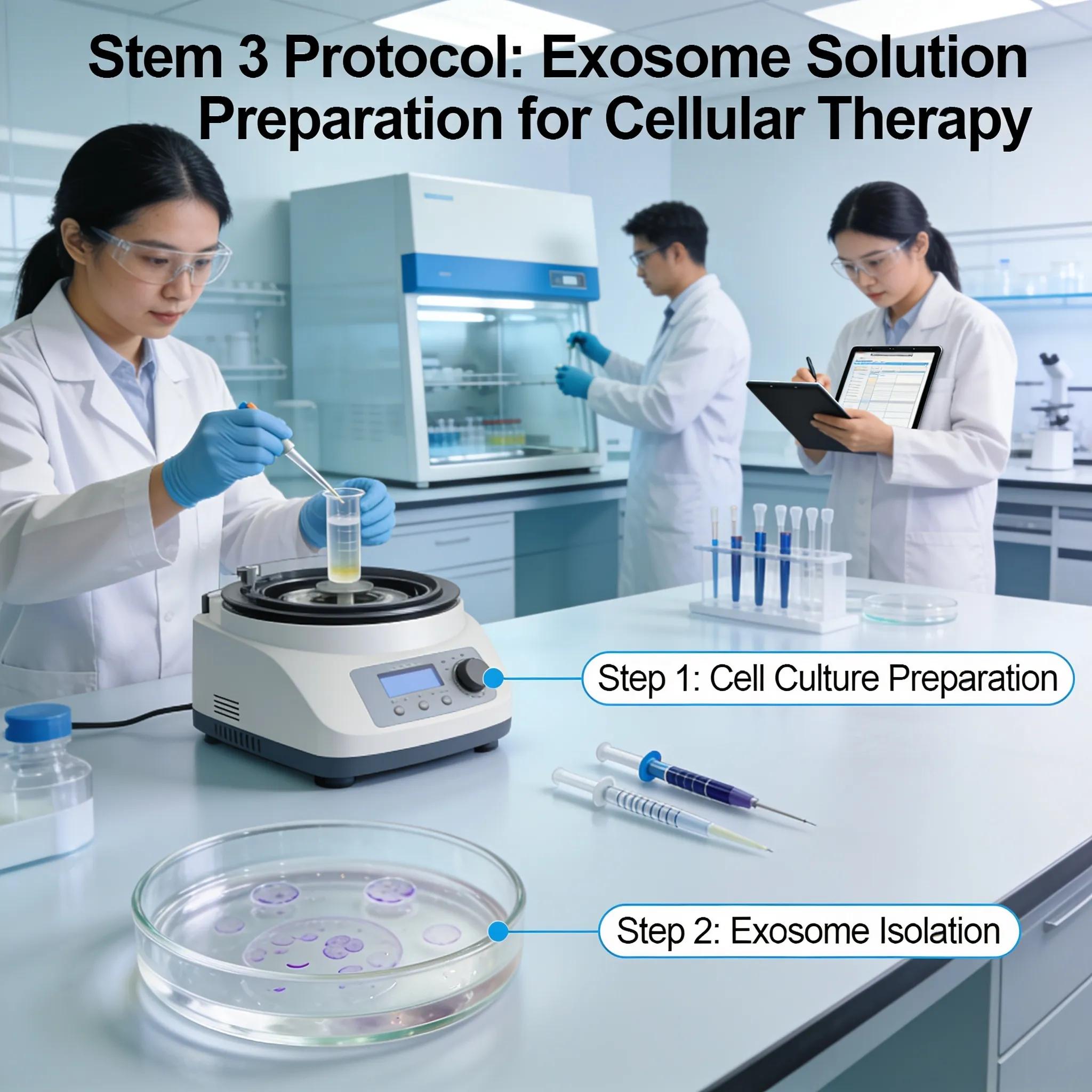
The Dezawa Protocol: What Patients Should Understand About Muse Cell Preparation
Medically reviewed by Dr. Charles Pereyra, MD — Medical Director, Springs Rejuvenation. Last reviewed October 15, 2026.
Written by the Springs Rejuvenation regenerative medicine team from direct clinical experience administering stem cell and exosome protocols at our Aventura, Miami center.
Multilineage-differentiating stress-enduring (Muse) cells represent an investigational approach in regenerative medicine, distinguished by the rigor with which they are isolated and characterized. The dezawa protocol—named after Professor Mari Dezawa at Tohoku University, who first described these cells in peer-reviewed literature—specifies a series of laboratory steps designed to identify and enrich cells bearing a particular surface marker and exhibiting resilience under stress conditions. Understanding how Muse cells are prepared, and why preparation method matters, helps patients evaluate whether this investigational therapy aligns with their questions and expectations.
The Origin of Muse Cell Science
Kuroda and colleagues, working with Dezawa, published the initial characterization of Muse cells in Proceedings of the National Academy of Sciences in 2010. That foundational work identified SSEA-3-positive cells within adult tissues—bone marrow, adipose, and dermal fibroblasts—that could survive prolonged stress and differentiate into multiple lineages in vitro. Wakao and Dezawa expanded on this in a 2011 PNAS study, demonstrating that these cells possess pluripotent-like qualities despite originating from adult tissue, a property that distinguishes them from more limited progenitor populations. These early studies established the scientific framework for what is now called the dezawa protocol, a standardized method for isolating cells that express the SSEA-3 marker and endure conditions that eliminate less resilient populations.
What Makes the Dezawa Protocol Distinctive
The dezawa protocol is not simply a matter of collecting cells from tissue; it is a multistep process that includes marker-based sorting, stress-endurance testing, and quality verification. The protocol relies on the presence of stage-specific embryonic antigen-3 (SSEA-3), a glycoprotein found on the surface of certain stem cells. By using antibodies that bind SSEA-3, laboratories can separate Muse cells from the larger population of mesenchymal cells present in donor tissue. This selection step is critical, because Muse cells typically constitute fewer than 3 percent of the total cells in a given sample. Without marker-based enrichment, the biological activity attributed to Muse cells would be diluted by non-Muse populations that lack the same differentiation and homing properties.
SSEA-3 Marker Selection and Quality Control
SSEA-3 expression is the defining characteristic used in the dezawa protocol. Flow cytometry or magnetic-activated cell sorting allows technicians to isolate cells positive for this marker. Once separated, these cells undergo further characterization to confirm their identity and potency. Quality assays typically measure viability, purity, and the ability to express markers of different tissue lineages when exposed to specific culture conditions. These assays are not regulatory requirements for all cell therapies, but they reflect the investigational nature of Muse cell research and the attempt to standardize preparation across different laboratories. Dr. Charles Pereyra, MD, emphasizes that patients considering any cell-based therapy should ask what markers were used to define the cells, what proportion of the delivered product expresses those markers, and what quality-control data are available for review.
Stress Endurance and Cell Potency
A less obvious but equally important feature of the dezawa protocol is the concept of stress endurance. Muse cells, as their name implies, can survive prolonged culture under low-serum or low-oxygen conditions that cause other cell types to die or lose function. This resilience is not merely a laboratory curiosity; it may correlate with the cells' ability to survive the hostile environment of damaged tissue after intravenous delivery. Yamada and colleagues demonstrated in a 2018 study published in Circulation Research that the S1P–S1PR2 signaling axis guides intravenously delivered Muse cells toward sites of injury in preclinical models, a finding that underscores the importance of using cells prepared to retain their homing capacity. Whether stress-endurance testing translates to superior clinical outcomes in humans remains an open question, as large-scale randomized trials have not yet been completed. Individual responses vary, and early-stage human studies such as the first-in-human safety trial reported by Noda and colleagues in 2020 provide only preliminary safety data, not proof of efficacy.
Physician-Supervised Application in Regenerative Medicine
At Springs Rejuvenation, physician-supervised Muse cell therapy follows the laboratory standards established by the dezawa protocol. Dr. Charles Pereyra, MD, reviews each patient's medical history, current health status, and candidacy for investigational cell therapy, explaining both the published evidence and its limitations. The goal is to ensure that patients understand what is known, what remains investigational, and what questions the existing literature cannot yet answer. Patients in the United States no longer need to travel overseas to access physician-supervised Muse cell therapy prepared according to these standards, though it is important to recognize that access does not equate to proven benefit. The literature includes both positive signals and modest or mixed results, and the therapy is not appropriate for every individual.
What Should Patients Ask Before Proceeding?
How are Muse cells different from other stem cell products?
Muse cells are defined by SSEA-3 expression and stress endurance, whereas many mesenchymal stem cell products do not undergo marker-based selection. This means a Muse cell preparation is enriched for a specific subpopulation, not simply a mixture of all cells present in the starting tissue. The clinical significance of this distinction is still being studied, and it is not yet clear whether Muse-enriched products produce different outcomes than unselected mesenchymal populations in all contexts.
What does the published evidence actually show?
The peer-reviewed literature on Muse cells includes preclinical studies, early-stage safety trials, and a small number of randomized controlled trials. Some studies report modest improvements in surrogate endpoints, while others show safety without dramatic efficacy signals. A randomized, double-blind trial conducted by Niizuma and colleagues in Japan in 2023 evaluated an investigational Muse cell product in a specific acute condition and found modest effects that did not meet all primary endpoints. Patients should expect variability, not certainty.
Is Muse cell therapy approved by the FDA?
No. Muse cell therapies are investigational in the United States and are not FDA-approved for any indication. Physicians may offer autologous or minimally manipulated cell therapies under certain regulatory pathways, but more extensively processed Muse cell products typically require investigational new drug applications or other regulatory oversight. Patients should verify the regulatory status of any cell product before proceeding.
What role does physician oversight play in the dezawa protocol?
Physician oversight ensures that patients are screened for contraindications, that the cells are administered under sterile conditions, and that follow-up monitoring occurs. The dezawa protocol itself is a laboratory method; clinical application requires additional steps including patient evaluation, informed consent, and post-administration care. No therapy has certain outcomes, and individualized medical judgment remains essential.
At Springs Rejuvenation, stem cell and exosome therapies are used together as part of a personalized regenerative protocol.
Medical Disclaimer: Stem cell and exosome therapy is not an FDA approved therapy and is considered to be in the experimental stages. These statements have not been evaluated by the FDA and are not intended to diagnose, treat, cure, or prevent any disease. Springs Rejuvenation processes exosomes in an FDA approved lab. Individual results may vary. This content is reviewed for medical accuracy by Dr. Charles Pereyra, MD, Medical Director of Springs Rejuvenation, and is provided for educational purposes only. Always consult a qualified physician.