
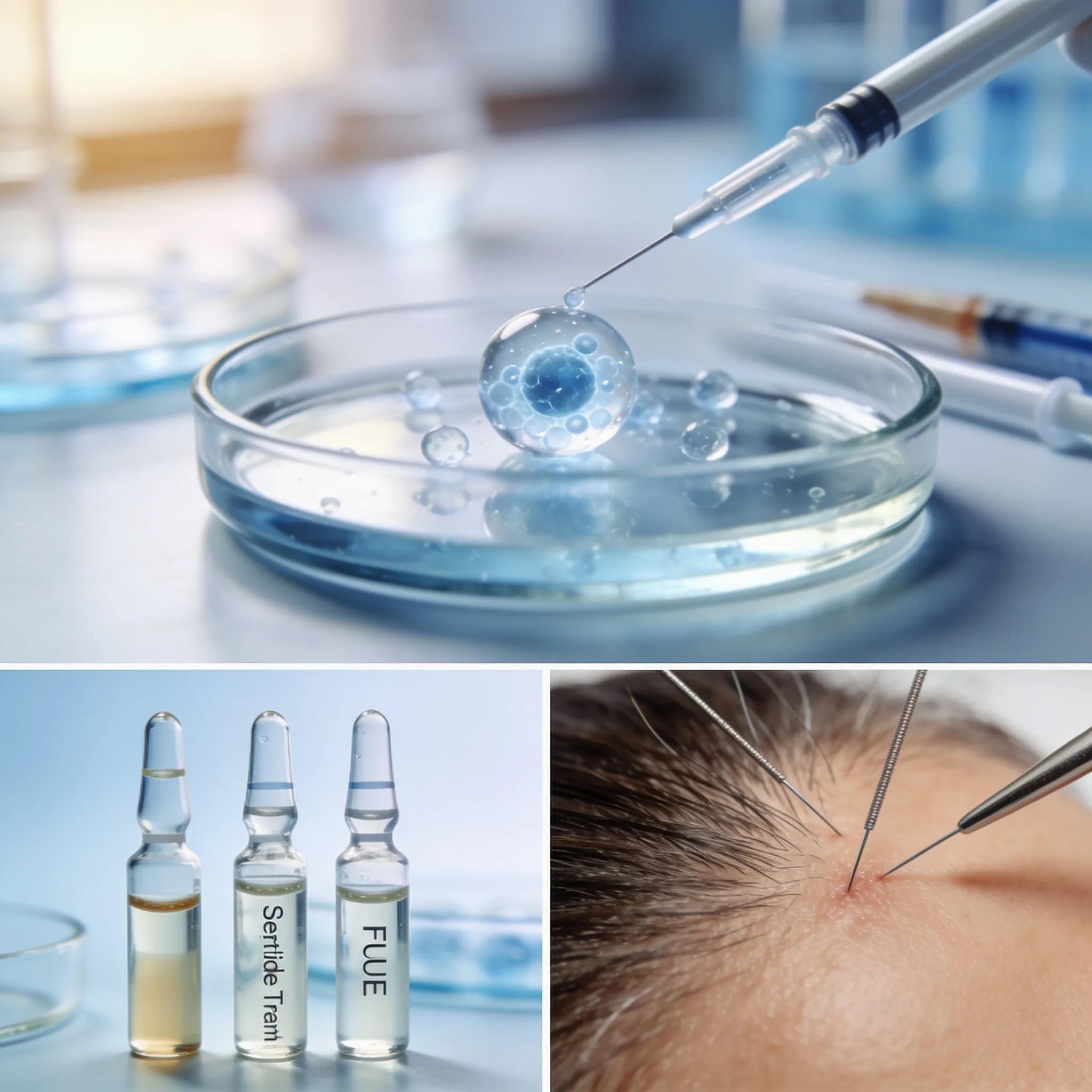
Stem Cell Specialist in New York: How to Evaluate Your Options
Medically reviewed by Dr. Charles Pereyra, MD — Medical Director, Springs Rejuvenation. Last reviewed October 28, 2026.
Written by the Springs Rejuvenation regenerative medicine team from direct clinical experience administering stem cell and exosome protocols at our Aventura, Miami center.
New York hosts dozens of practices offering regenerative medicine services, from academic medical centers conducting federally funded trials to private clinics administering autologous and allogeneic cell therapies. For patients investigating their options, the challenge is not finding a provider but evaluating credentials, understanding what published evidence supports—or questions—the approach, and distinguishing investigational therapies from experimental marketing. This article outlines the criteria patients should apply when choosing a stem cell specialist in New York and explains the science behind two classes of cells now studied in peer-reviewed literature.
The Landscape of Regenerative Medicine in New York
New York's regenerative medicine community includes university-affiliated researchers publishing in journals like Circulation Research and Neurology, as well as physician-led practices offering same-day autologous procedures or culture-expanded allogeneic products. Academic centers typically run trials with multi-year follow-up and placebo controls. Private practices often provide therapies that fall outside the scope of those trials—investigational interventions for musculoskeletal conditions, hair restoration, or systemic inflammation—based on early-stage or international studies.
Because regenerative therapies are not FDA-approved for most indications, patients bear responsibility for verifying that the physician holds active board certification, explains the limitations of the published evidence, and provides written disclosure of investigational status. No licensing board in New York requires proof of outcomes before a physician may offer autologous or minimally manipulated cell therapies, so due diligence rests with the patient.
What to Look for When Choosing a Stem Cell Specialist in New York
A rigorous evaluation begins with verifiable credentials. Confirm that the physician maintains an active National Provider Identifier and current board certification through the American Board of Medical Specialties database. Ask whether the practice publishes peer-reviewed research or participates in registry studies that track long-term outcomes. Request a written summary of the proposed therapy, including the cell source (autologous adipose, bone marrow, allogeneic umbilical cord, or pluripotent-like Muse cells), processing method, and any published studies that describe the mechanism or clinical results.
Dr. Charles Pereyra, MD, a board-certified emergency medicine physician and member of the International Society of Hair Restoration Surgery, conducts all candidacy evaluations at the Springs Rejuvenation New York location at 245 5th Avenue. During the consultation, Dr. Pereyra reviews the patient's imaging, laboratory work, and prior therapies, explains which peer-reviewed studies are relevant to the patient's condition, and provides written disclosure that the proposed intervention is investigational and not FDA-approved. No outcome percentages or predictions of certain response are offered; instead, the discussion centers on published mechanisms, patient selection criteria used in clinical trials, and realistic timelines for observing any change.
Patients should also ask how the practice monitors adverse events and whether data are contributed to any post-market surveillance registry. A provider who cannot cite a single peer-reviewed paper, who promises specific results, or who dismisses the need for physician oversight should be avoided. The proliferation of med-spas offering "stem cell facials" or unlicensed products underscores the importance of distinguishing physician-supervised investigational therapies from cosmetic marketing.
Understanding the Science: Published Evidence on Muse Cells and Mesenchymal Stromal Cells
Two categories of cells appear repeatedly in the regenerative medicine literature: mesenchymal stromal cells (MSCs) and multilineage-differentiating stress-enduring (Muse) cells. MSCs, harvested from bone marrow, adipose tissue, or umbilical cord, have been studied in hundreds of trials. Muse cells, a rare pluripotent-like population identified by Kuroda, Dezawa and colleagues in 2010, are defined by surface marker SSEA-3 and the ability to differentiate into cells of all three germ layers under specific culture conditions.
Yamada and colleagues (2018) demonstrated that intravenously delivered Muse cells home to damaged tissue via the S1P–S1PR2 signaling axis in a preclinical model, suggesting a mechanism by which systemically administered cells might reach sites of injury without direct injection. That finding informed the design of a first-in-human study in Japan (Noda and colleagues, 2020), which reported no serious adverse events in a small cohort receiving intravenous Muse cells. A subsequent randomized, double-blind trial (Niizuma and colleagues, 2023) in Japan found modest improvements in a subset of patients, though the primary endpoint did not reach statistical significance across the entire cohort. These results illustrate an important principle: not every published trial is positive, and individual responses vary.
Mesenchymal stromal cells have been evaluated in larger trials. Hare and colleagues (2009) published a randomized study of intravenous allogeneic MSCs, establishing a preliminary understanding of dosing and monitoring. Bartolucci and colleagues (2017) reported that umbilical-cord-derived MSCs led to an average improvement of approximately seven points in left ventricular ejection fraction in a subset of patients with chronic conditions. Both studies emphasize that early-stage evidence requires replication in multicenter trials before any intervention can be considered standard of care.
For hair restoration, small studies such as Shin and colleagues (2015) have explored adipose-derived stem cell conditioned media in androgenetic alopecia, and Gentile and Garcovich (2019) conducted a systematic review of platelet-rich plasma. The literature remains preliminary, with variability in processing protocols and outcome measures. No peer-reviewed consensus supports the claim that any regenerative approach reverses hair loss in every patient; the evidence suggests only that certain individuals respond to certain protocols.
Physician-Led Screening and the Role of Candidacy Evaluation
Investigational therapies carry both potential benefit and unknown risk. A thorough candidacy evaluation reduces the likelihood that a patient with contraindications—active infection, malignancy, severe immune suppression, or coagulation disorders—receives a cell-based intervention that could cause harm. Dr. Charles Pereyra conducts this screening at the New York center, reviewing complete blood counts, metabolic panels, imaging studies, and medication lists. Patients on anticoagulants, for example, may require dose adjustment or temporary discontinuation before any procedure involving aspiration or injection.
The consultation also serves an educational function. Dr. Pereyra explains that published studies report population-level averages, not individual certainties. A trial showing a seven-point improvement in a cohort does not mean every participant gained seven points; some improved more, some less, and some not at all. Patients learn to interpret terms like "investigational," "early-stage," and "not FDA-approved" as signals that the intervention lacks the regulatory endorsement that follows Phase III trials and New Drug Application approval.
A physician who omits this discussion—who instead emphasizes testimonials, before-and-after galleries, or success rates—undermines informed consent. Patients deserve to know which questions the published literature has answered, which remain open, and what the honest limitations of current evidence are.
Accessing Investigational Therapies in the United States
For years, patients seeking Muse cell or high-dose MSC therapies traveled to clinics in Mexico, Colombia, or Panama, where regulatory frameworks differ from those in the United States. Physician-supervised Muse cell therapies are now available domestically, eliminating the logistical burden and legal ambiguity of overseas procedures. Springs Rejuvenation's New York location at 245 5th Avenue provides access to these investigational interventions under the supervision of a U.S.-licensed, board-certified physician who remains accountable to state medical boards and can coordinate follow-up care with the patient's existing specialists.
Staying within the United States also means that adverse events are reported through domestic channels, laboratory work is processed by CLIA-certified facilities, and patients can seek recourse through established legal and regulatory systems. The convenience of remaining in New York—avoiding international flights, unfamiliar hospitals, and the difficulty of arranging follow-up imaging or lab work across borders—should not be underestimated.
Patients considering any regenerative intervention should ask whether the practice has a defined protocol for monitoring outcomes, whether follow-up visits are included, and how long the physician has been offering the specific therapy. A newly opened clinic with no track record warrants more scrutiny than a practice that has been conducting candidacy evaluations and follow-up assessments for multiple years.
Frequently Asked Questions
Are stem cell therapies FDA-approved?
No stem cell or Muse cell therapy for musculoskeletal conditions, hair restoration, or systemic inflammatory conditions is FDA-approved. These interventions are investigational. Certain autologous same-day procedures fall within regulatory exemptions for minimal manipulation, but even those lack the formal approval process that follows multi-phase clinical trials. Patients should receive written disclosure of investigational status before proceeding.
How do I verify a physician's credentials?
Search the physician's name and National Provider Identifier on the American Board of Medical Specialties website to confirm active board certification. Check the state medical board database for any disciplinary actions. Ask whether the physician has published peer-reviewed research or contributed data to outcomes registries. Membership in professional societies like the International Society of Hair Restoration Surgery or the International Society for Stem Cell Research may indicate engagement with the scientific literature.
What should I expect during a candidacy evaluation?
A comprehensive evaluation includes review of your medical history, current medications, recent laboratory results, and imaging studies. The physician will explain the proposed cell source, processing method, administration route, and any relevant peer-reviewed studies. You should receive a written summary stating that the therapy is investigational and not FDA-approved. The physician should also describe how outcomes will be monitored and what follow-up schedule is recommended. No responsible provider will quote success rates or offer outcome certainties.
Why is published evidence important when choosing a provider?
Published peer-reviewed studies undergo independent expert review and must disclose methods, patient selection criteria, adverse events, and statistical analyses. A provider who cites specific papers—like the Yamada 2018 study on homing mechanisms or the Niizuma 2023 trial with its mixed results—demonstrates literacy in the scientific literature and a willingness to discuss both supportive findings and null outcomes. A provider who relies solely on testimonials or advanced protocols that have never been published cannot offer the same level of transparency or accountability.
At Springs Rejuvenation, stem cell and exosome therapies are used together as part of a personalized regenerative protocol.
Medical Disclaimer: Stem cell and exosome therapy is not an FDA approved therapy and is considered to be in the experimental stages. These statements have not been evaluated by the FDA and are not intended to diagnose, treat, cure, or prevent any disease. Springs Rejuvenation processes exosomes in an FDA approved lab. Individual results may vary. This content is reviewed for medical accuracy by Dr. Charles Pereyra, MD, Medical Director of Springs Rejuvenation, and is provided for educational purposes only. Always consult a qualified physician.