
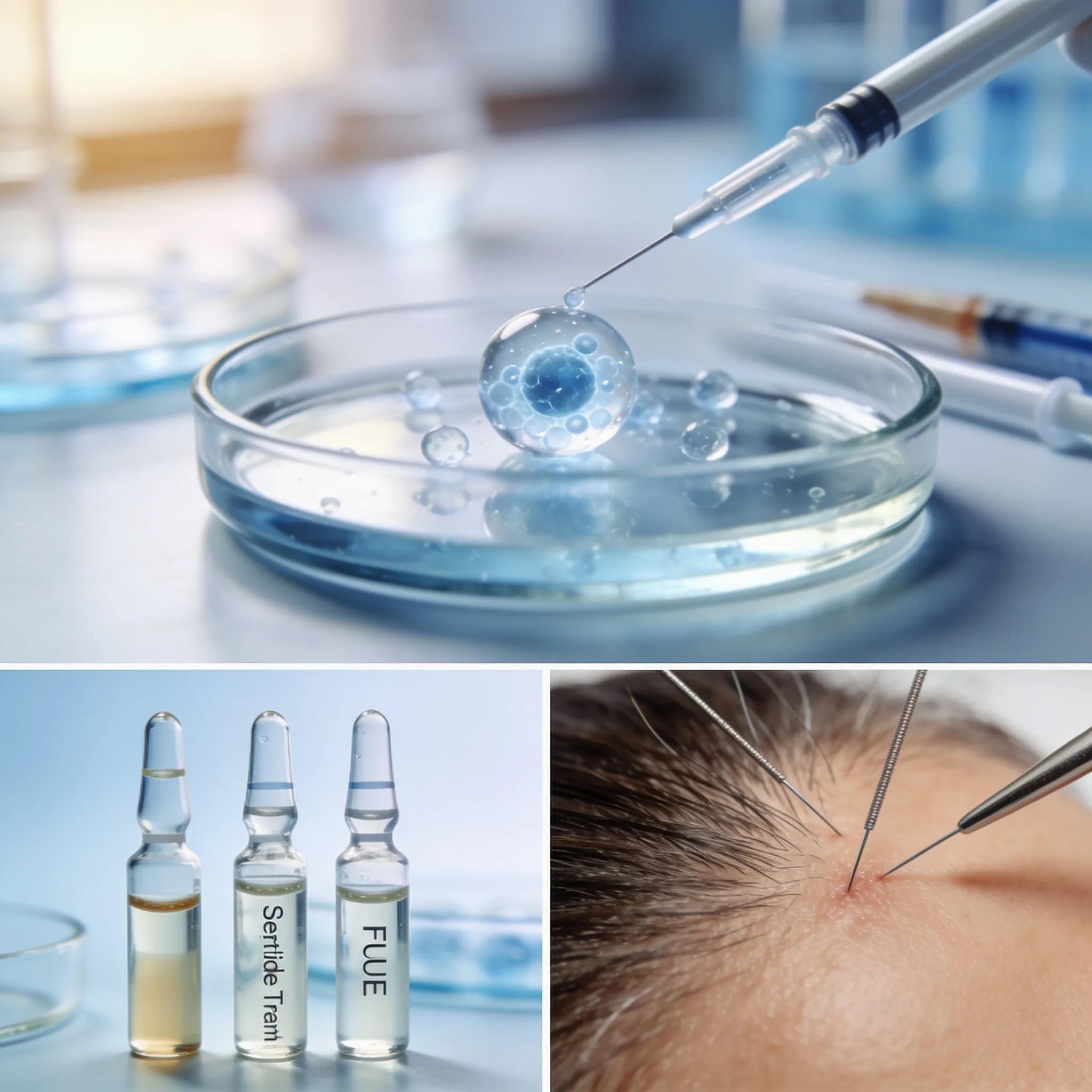
South Beach: Separating Muse Cell Evidence From Marketing
Medically reviewed by Dr. Charles Pereyra, MD — Medical Director, Springs Rejuvenation. Last reviewed November 17, 2026.
Written by the Springs Rejuvenation regenerative medicine team from direct clinical experience administering stem cell and exosome protocols at our Aventura, Miami center.
Muse cell therapy south beach searches increasingly return a mix of physician-led regenerative medicine and wellness marketing that makes no distinction between licensed cell lines and unverified preparations. The key difference: Muse cells—multilineage-differentiating stress-enduring cells, first characterized by Kuroda, Dezawa and colleagues (PNAS 2010)—are SSEA-3-positive pluripotent-like cells with a documented homing mechanism, while many South Beach clinics describe "stem cell therapy" without naming the cell type, dose, or published evidence.
This article walks through the peer-reviewed science, red flags in aesthetic-clinic marketing, and what physician-supervised candidacy screening looks like when muse cell therapy south beach means evidence-based regenerative medicine rather than cosmetic upsell.
What Makes Muse Cells Different From Generic Stem Cell Marketing?
Muse cells are a rare subpopulation of mesenchymal stromal cells distinguished by stress tolerance and pluripotent-like surface markers. Wakao, Dezawa and colleagues (PNAS 2011) demonstrated that these cells survive conditions that eliminate most cell preparations and can differentiate into multiple tissue lineages under appropriate signals.
The defining feature many South Beach marketing campaigns omit is the homing mechanism. Yamada and colleagues (Circ Res 2018) showed that intravenously delivered Muse cells migrate to damaged tissue via the S1P–S1PR2 signaling axis—a chemotactic pathway activated by sphingosine-1-phosphate released from injured cells. Generic "stem cell" or exosome messaging rarely specifies delivery route, cell surface markers, or migration pathways, leaving prospective patients unable to compare what is actually being offered.
Noda and colleagues (Circ J 2020) published the first-in-human Japanese safety study of an investigational Muse cell product, while Niizuma and colleagues (Neurology 2023) reported a randomized, double-blind Japanese trial showing modest outcomes—not every endpoint reached statistical significance, underscoring that the literature is investigational and mixed. Clinics that present regenerative medicine as uniformly positive or FDA-approved are misrepresenting the state of the evidence.
Red Flags in South Beach Aesthetic-Clinic Muse Cell Messaging
Third, absence of physician-led candidacy screening. A clinic that books therapy sessions without reviewing medical history, current medications, imaging, or laboratory work is operating as a cosmetic spa rather than a medical practice. Dr. Charles Pereyra, MD, a board-certified emergency medicine physician who oversees candidacy evaluation at Springs Rejuvenation's Miami location, declines applicants when prior imaging shows findings that make regenerative approaches less plausible or when the individual's expectations exceed what early-stage evidence can support.
Fourth, pricing opacity and package-deal language. Medical therapies are dosed and priced based on individual presentation; wellness packages priced identically for everyone suggest a retail rather than clinical model.
| Evidence-Based Practice | Aesthetic-Marketing Red Flag |
|---|---|
| Names the cell type, surface markers, dose | "advanced stem cell blend" |
| Cites peer-reviewed journal articles by name | White papers, testimonials, case studies |
| Physician reviews imaging, labs, history | Book online, same-day therapy |
| Describes therapy as investigational | Claims FDA approval or certain outcomes |
| Transparent about null trials and limitations | Universally positive framing |
How to Verify Muse Cell Provenance When Considering Therapy in Miami
Provenance—the documented source, handling, and characterization of cells—is the detail most South Beach marketing avoids. Patients evaluating muse cell therapy south beach should ask which laboratory produced the preparation, whether the cells were flow-cytometry verified for SSEA-3 expression, what viability testing was performed, and whether the product matches any published trial protocol.
Licensed cell lines derived from Dezawa laboratory protocols carry documented chain of custody, but those preparations remain restricted and not all clinics using the term "Muse" are working with verified material. Asking for a certificate of analysis, the name of the cell bank, and third-party testing results distinguishes physician-supervised regenerative medicine from repackaged wellness products.
Dr. Charles Pereyra walks Miami-area candidates through these questions during screening visits, explaining which aspects of the published evidence apply to the specific preparation being considered and which are extrapolations from related research. Transparency about what is known versus what is assumed separates medical practice from marketing.
Who Is NOT a Candidate for Muse Cell Therapy?
Physician-led screening declines applicants when medical history, current medications, or imaging findings make regenerative approaches implausible or when expectations cannot align with early-stage investigational evidence. Individuals currently taking immunosuppressive medications, those with active infections, or those whose imaging shows structural findings unlikely to respond to cell-based interventions are often deferred or declined.
Equally important: individuals seeking outcome certainty rather than participation in an investigational therapy. Regenerative medicine remains early-stage; Hare and colleagues (JACC 2009) and Bartolucci and colleagues (Circ Res 2017, RIMECARD trial) published safety and modest-efficacy data for intravenous mesenchymal stromal cells in select contexts, but individual responses vary widely and no therapy has certain outcomes.
Some South Beach wellness clinics omit this conversation entirely, booking anyone who can pay. That model optimizes revenue; it does not optimize medical appropriateness.
What Physician-Supervised Muse Cell Therapy Looks Like in Miami
Evidence-grounded muse cell therapy south beach begins with a candidacy evaluation that reviews prior imaging (MRI, ultrasound, X-ray depending on the area of concern), laboratory work assessing overall health and clotting function, medication list, and a conversation about what the published literature does and does not show. Dr. Pereyra explains which studies are relevant to the individual's situation, describes the investigational nature of the approach, and sets expectations grounded in peer-reviewed outcomes rather than marketing claims.
Therapy itself involves intravenous delivery when systemic homing is the goal or localized injection for joint or soft-tissue applications. The S1P–S1PR2 axis described by Yamada and colleagues (Circ Res 2018) suggests that intravenously delivered Muse cells migrate toward sites releasing damage signals, but migration efficiency in human patients remains under investigation.
Follow-up intervals are scheduled to monitor response, adjust supportive therapies, and document outcomes for internal quality tracking. This is investigational medicine conducted under physician supervision, not a one-visit cosmetic procedure.
Springs Rejuvenation's Miami location offers this approach without requiring patients to travel overseas, where regulatory environments vary and post-therapy follow-up becomes logistically difficult.
Muse Cells for Hair Restoration: Aesthetic Hype Versus Published Data
Several South Beach aesthetic clinics market muse cell therapy south beach for hair restoration, often alongside platelet-rich plasma and exosome preparations. The published evidence for Muse cells specifically in androgenetic alopecia is limited; most hair-restoration literature focuses on PRP (Gentile and Garcovich, Cells 2019 systematic review) or adipose-derived stem cell conditioned media (Shin and colleagues, Int J Dermatol 2015, small study).
Clinics conflating Muse cells with generic exosome marketing or presenting hair restoration as a primary Muse cell indication are extrapolating beyond the trial data. Honest discussion acknowledges that hair applications remain exploratory, that platelet-rich plasma has more published support, and that individual responses are unpredictable.
What does the evidence NOT show yet about Muse cell therapy?
The published Muse cell literature remains early-stage and does not demonstrate long-term durability, dose-response relationships across diverse patient populations, or head-to-head superiority over other regenerative approaches. The Niizuma trial (Neurology 2023) showed modest, not transformative, outcomes in its primary endpoints. No large-scale phase III trials have established efficacy benchmarks, and FDA approval has not been granted for any Muse cell product outside of investigational contexts. Clinics presenting these therapies as proven or standard-of-care are overstating the science.
How do I know if a South Beach clinic is offering real Muse cells?
Ask for documentation: the cell bank name, flow-cytometry results confirming SSEA-3 positivity, viability assays, and whether the preparation matches a published protocol. Request a certificate of analysis. If the clinic cannot or will not provide these details, the product may be generically labeled rather than verified Muse cells. Physician-supervised practices are transparent about provenance; wellness spas often deflect these questions with advanced-blend language.
Can I receive Muse cell therapy without traveling internationally?
Yes. Physician-supervised investigational regenerative medicine using Muse cells or similar preparations is available at select US clinics, including Springs Rejuvenation's Miami location, eliminating the logistical and follow-up challenges of overseas medical travel. The regulatory pathway differs from FDA-approved therapies, but investigational use under physician oversight is permissible and avoids the risks of unregulated international clinics.
Why do some South Beach clinics decline certain candidates?
Medical appropriateness. Imaging may show structural findings that cell-based therapies are unlikely to address, current medications may interfere with cell engraftment, or the individual's expectations may exceed what investigational evidence supports. Clinics that accept every applicant are optimizing for revenue rather than outcomes. Physician-led candidacy screening, as conducted by Dr. Pereyra, prioritizes selecting individuals whose presentation aligns with plausible benefit based on early-stage published data.
Medical Disclaimer: Stem cell and exosome therapy is not an FDA approved therapy and is considered to be in the experimental stages. These statements have not been evaluated by the FDA and are not intended to diagnose, treat, cure, or prevent any disease. Springs Rejuvenation processes exosomes in an FDA approved lab. Individual results may vary. This content is reviewed for medical accuracy by Dr. Charles Pereyra, MD, Medical Director of Springs Rejuvenation, and is provided for educational purposes only. Always consult a qualified physician.