
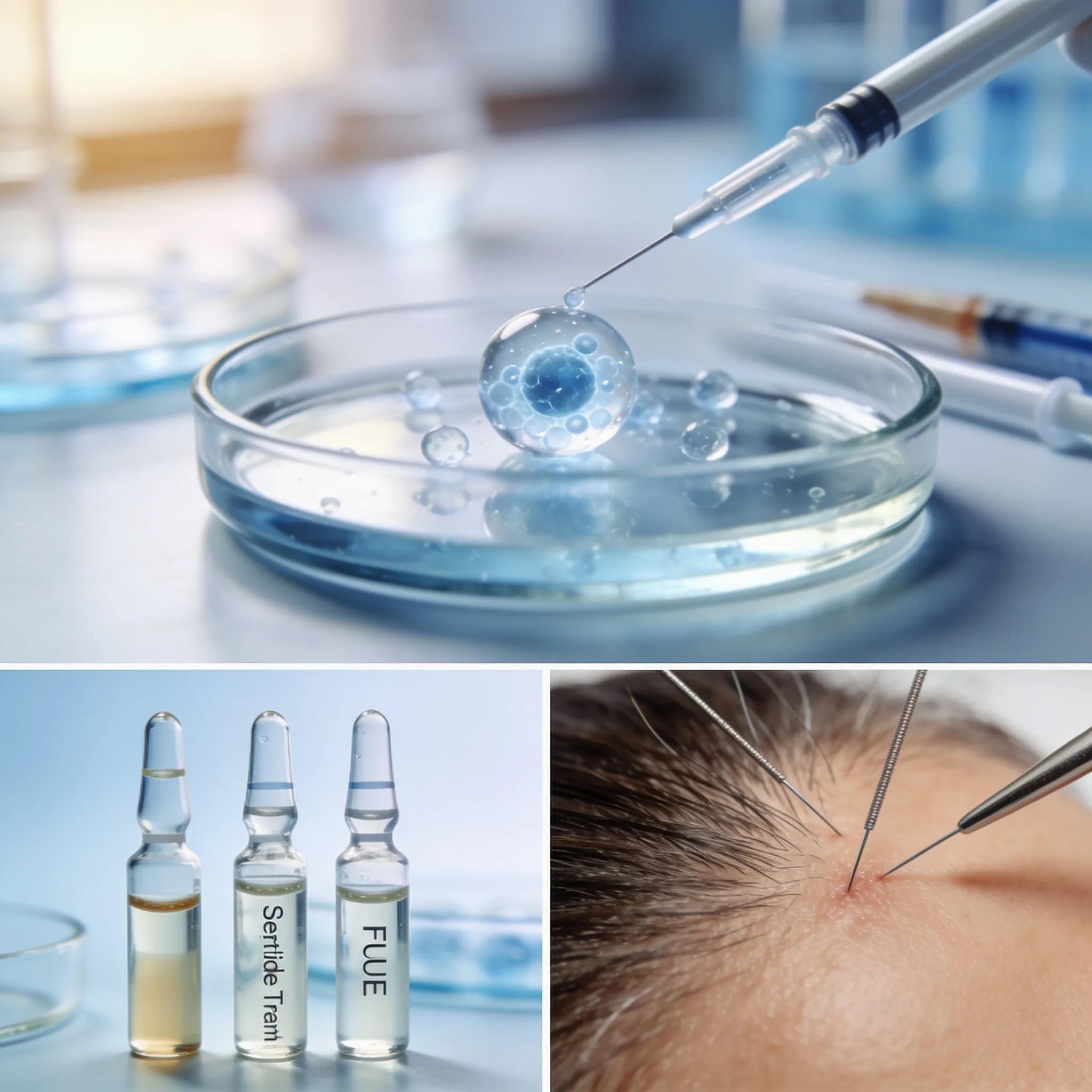
Kendall: Joint Pain, Hair Loss and Where Muse Cell Research Fits
Medically reviewed by Dr. Charles Pereyra, MD — Medical Director, Springs Rejuvenation. Last reviewed November 24, 2026.
Written by the Springs Rejuvenation regenerative medicine team from direct clinical experience administering stem cell and exosome protocols at our Aventura, Miami center.
Muse cell therapy represents an investigational approach in regenerative medicine, drawing from peer-reviewed research on SSEA-3+ cells first characterized by Kuroda, Dezawa and colleagues in 2010. For residents of Kendall and greater Miami considering options for joint discomfort or hair thinning, understanding where Muse cells sit relative to PRP, exosomes and established surgical methods—and what the published evidence actually shows—matters more than marketing claims.
What Are Muse Cells and Why Does the Research Matter?
Muse (Multi-lineage differentiating Stress Enduring) cells are a rare subset of mesenchymal stem cells expressing the SSEA-3 surface marker. Wakao, Dezawa and colleagues demonstrated in 2011 that these cells retain pluripotent-like properties in adult tissue, capable of differentiating into cell types across lineages under laboratory conditions. The defining characteristic, explored in Yamada and colleagues' 2018 work, is their apparent homing mechanism: intravenously delivered Muse cells appear guided by the S1P–S1PR2 signaling axis to sites of tissue damage in preclinical models.
Early-stage human data exist. A first-in-human Japanese safety study (Noda 2020) evaluated intravenous Muse cell product CL2020 and reported no serious adverse events. A subsequent randomized double-blind Japanese trial (Niizuma 2023) yielded modest results on its primary endpoint—a reminder that not every study is uniformly positive. Individual responses vary, and Muse cell therapy is not FDA approved for any indication in the United States.
What distinguishes physician-led Muse cell therapy in Miami from traveling overseas is access to investigational protocols supervised domestically, physician screening for candidacy, and the ability to integrate Muse cells with established interventions such as platelet-rich plasma or surgical grafting when appropriate. Dr. Charles Pereyra, MD, a board-certified emergency medicine physician and member of the International Society of Hair Restoration Surgery (ISHRS), evaluates each candidate individually at Springs Rejuvenation's Miami location, reviewing medical history, current medications and baseline labs before determining whether Muse cell therapy kendall residents inquire about aligns with their situation.
How Do Joint Pain Options Compare: PRP, Exosomes, Muse Cells?
Patients asking about knee, hip or shoulder discomfort often encounter three regenerative approaches marketed with overlapping language. The table below compares evidence tier, mechanism and typical candidacy:
| Modality | Proposed Mechanism | Human Evidence Tier | Typical Candidacy |
|---|---|---|---|
| Platelet-Rich Plasma (PRP) | Growth-factor release from concentrated platelets | Multiple randomized trials; mixed results | Mild to moderate osteoarthritis, tendinopathy |
| Exosomes | Extracellular vesicles carrying signaling molecules | Mostly preclinical; sparse human data | Investigational; often combined with PRP or cells |
| Muse Cells | Homing to damaged tissue, potential differentiation | Early-stage safety studies; efficacy still under investigation | Candidates seeking investigational cell-based options |
PRP has the longest clinical track record, though published trials show variable outcomes depending on osteoarthritis severity, injection technique and preparation method. Exosomes sit further along the investigational spectrum: their proposed paracrine effects are biologically plausible, but controlled human studies remain limited. Muse cells, as cell-based therapy rather than acellular product, carry a distinct regulatory and biological profile—intravenous delivery use the homing mechanism described by Yamada 2018, while direct injection places cells at the target site without relying on systemic migration.
Dr. Charles Pereyra emphasizes that individual responses to regenerative modalities vary. Some patients experience meaningful symptomatic improvement; others see minimal change. Joint imaging, functional status and prior interventions all inform whether muse cell therapy kendall patients ask about makes sense as a next step or whether a more established intervention should come first.
What Does the Stem 3 Protocol Look Like for Hair Loss?
Hair restoration at Springs Rejuvenation Miami follows a physician-directed sequence, not a one-size-fits-all package. The Stem 3 Protocol integrates micro-follicular unit extraction (micro-FUE), scalp-directed Muse cell or exosome support, and scheduled physician follow-up to track graft survival and scalp health over nine to twelve months.
Micro-FUE places individual grafts harvested from donor zones into thinning areas. Gentile and Garcovich's 2019 systematic review documented PRP's role in supporting graft survival and potentially stimulating miniaturized follicles in androgenetic alopecia, though outcomes varied across studies. Shin and colleagues' 2015 pilot study explored adipose-derived stem cell conditioned media for alopecia, reporting density increases in a small cohort—early data, not established standard of care.
Muse cells enter the protocol as scalp-injected support, hypothesized to augment the local regenerative environment through paracrine signaling. The mechanism is not fully understood, and the evidence base for Muse cells in hair specifically is narrower than for PRP. What patients should expect is a gradual process: a shedding phase in weeks two through four as transplanted grafts reset, first visible signs around three to four months, and full assessment deferred until nine to twelve months. Individual responses vary—some patients see robust density improvement, others more modest gains.
Who Is a Good Candidate for Muse Cell Therapy in Kendall?
Physician screening determines candidacy. Blood work, medical history review and imaging (when joint-related) precede any recommendation. The lists below reflect common candidacy patterns, not absolute rules:
Often a Good Fit:
- Mild to moderate joint degeneration with imaging confirmation
- Androgenetic alopecia (pattern hair loss) with adequate donor density
- No active infection or uncontrolled inflammatory condition
- Realistic expectations about gradual, variable outcomes
- Willingness to complete follow-up visits over six to twelve months
Worth a Conversation First:
- Advanced joint degeneration where surgical replacement is imminent
- Certain medications that affect wound healing or clotting
- Recent illness or baseline lab abnormalities requiring stabilization
Screening is not a sales consultation. Dr. Pereyra reviews whether the peer-reviewed rationale for Muse cell therapy aligns with the patient's clinical picture, discusses alternatives (including doing nothing), and sets expectations grounded in published data rather than testimonial-style promises. Some candidates are advised to pursue a more conventional option first; others are cleared to proceed with the understanding that individual responses vary.
What Is the Timeline from Screening to Follow-Up?
Regenerative protocols unfold over months, not weeks. The timeline below reflects typical sequencing for muse cell therapy kendall residents undergo at Springs Rejuvenation Miami:
Month 0 (Screening): Physician consultation, medical history review, baseline bloodwork (including potassium and other relevant markers), imaging if joint-related. Candidacy discussion and informed consent if proceeding.
Month 1 (Procedure): Muse cell or combined protocol administered. Joint injections are brief outpatient procedures. Hair protocols involving micro-FUE take several hours under local anesthesia. Activity restrictions and care instructions provided.
Months 2–3: Early healing phase. Hair patients experience shedding; joint patients may notice initial inflammation settling. No dramatic changes expected yet. First follow-up visit assesses healing and addresses questions.
Months 4–6: Early signs emerge. Hair patients may see faint new growth; joint patients may report incremental functional improvement or no change. Second follow-up visit includes repeat imaging (joints) or scalp photography (hair).
Months 9–12: Full assessment window. Hair density is evaluated against baseline; joint function and imaging are compared to pre-procedure status. Some patients pursue a second round; others conclude the protocol. Long-term maintenance (PRP touch-ups, lifestyle modification) is discussed.
This timeline assumes uncomplicated healing. Slower responders may need extended follow-up; complications or non-response trigger earlier reassessment. The investigational nature of Muse cell therapy means surprises—positive and negative—occur, and physician oversight allows course correction when needed.
How Is a Physician-Led Hair Consultation Different from a Sales Consultation?
Many hair restoration clinics lead with before-and-after galleries and pricing tiers, delegating medical screening to intake staff. A physician-led consultation at Springs Rejuvenation Miami inverts that sequence. Dr. Pereyra conducts the initial scalp examination, reviews donor-zone quality, discusses realistic density goals and explains why certain candidates are better served by medical management (minoxidil, finasteride) before or instead of surgical grafting.
The ISHRS credential matters here: systematic training in graft survival rates, donor-zone preservation and complication management informs the candidacy conversation. Muse cell therapy is presented as one tool, not the only tool, and the evidence base—Gentile 2019's systematic review showing variable PRP results, Shin 2015's small pilot study on ADSC conditioned media—is discussed candidly. No therapy has certain outcomes, and understanding the range of published results helps patients decide whether the investigational approach aligns with their risk tolerance and timeline.
Why Consider Muse Cell Therapy in Miami Instead of Traveling Overseas?
International stem cell clinics market Muse cell protocols with varying regulatory oversight. Some operate in jurisdictions with minimal safety monitoring; others follow rigorous standards but require multi-week stays and international follow-up logistics. Accessing muse cell therapy kendall patients can reach without leaving South Florida offers several practical advantages: domestic physician accountability, easier follow-up for complications or questions, integration with US-based imaging and lab systems, and no language or travel barriers during the healing phase.
Springs Rejuvenation's Miami location provides investigational Muse cell protocols under physician supervision, adhering to informed-consent standards and adverse-event reporting practices common in US clinical settings. The therapy itself is not FDA approved, and patients should understand that investigational means exactly that—outcomes are still being characterized, and individual results vary widely. What physician-led administration in Miami provides is continuity: the same physician who screens you follows your progress, adjusts the protocol if complications arise, and discusses next steps based on your actual response rather than a preset package.
How long does it take to see results from Muse cell therapy?
Joint protocols typically show early functional changes around eight to twelve weeks, though some patients report no improvement until four to five months or not at all. Hair protocols follow a longer arc: shedding in weeks two through four, faint regrowth around three to four months, and full density assessment deferred until nine to twelve months. The investigational nature of Muse cells means the timeline is not uniform, and physician follow-up helps distinguish normal delayed response from non-response requiring a different approach.
Is Muse cell therapy covered by insurance?
No. Muse cell therapy is investigational and not FDA approved for any indication, so private insurance and Medicare do not reimburse the procedure or associated imaging. Patients pay out of pocket. Cost factors include whether the protocol is standalone or combined with PRP or surgical grafting, the number of injection sites or grafts, and the follow-up schedule. Transparent pricing and financing options are discussed during the screening visit, before any procedure is scheduled.
Can Muse cell therapy be combined with other joint or hair interventions?
Yes, and combination protocols are common. Joint patients may receive Muse cells alongside PRP or exosomes; hair patients often integrate Muse scalp injections with micro-FUE grafting as part of the Stem 3 Protocol. The rationale is that different modalities may address different aspects of tissue regeneration—growth-factor release from PRP, paracrine signaling from exosomes, potential cell engraftment and differentiation from Muse cells. Published evidence for combination protocols is sparse, so these remain investigational, and physician judgment guides which combinations make sense for a given patient's situation.
What are the risks of Muse cell therapy?
Intravenous Muse cell administration has been evaluated in early-stage safety studies, including a first-in-human Japanese study (Noda 2020) that reported no serious adverse events. Direct injection into joints or scalp carries typical procedural risks: infection, bleeding, temporary inflammation and pain at the injection site. Allergic reactions to cell-processing media or anesthetics are possible. Long-term risks are still being characterized because Muse cell therapy in humans is investigational, with follow-up data extending only a few years in the published literature. Physician screening identifies patients at higher risk—those on certain medications, with baseline clotting abnormalities or active infections—and excludes them or requires stabilization first.
Medical Disclaimer: Stem cell and exosome therapy is not an FDA approved therapy and is considered to be in the experimental stages. These statements have not been evaluated by the FDA and are not intended to diagnose, treat, cure, or prevent any disease. Springs Rejuvenation processes exosomes in an FDA approved lab. Individual results may vary. This content is reviewed for medical accuracy by Dr. Charles Pereyra, MD, Medical Director of Springs Rejuvenation, and is provided for educational purposes only. Always consult a qualified physician.