
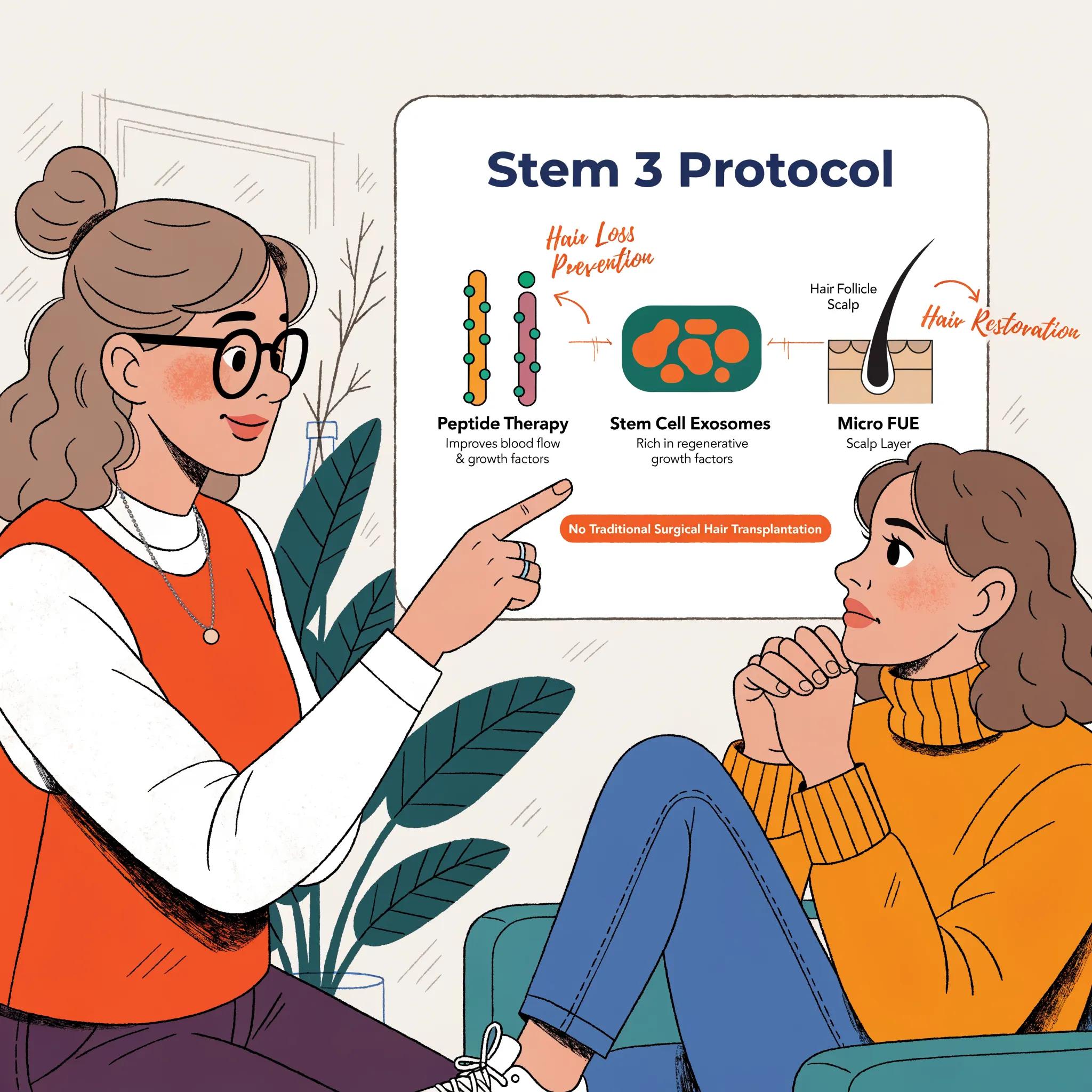
Doctor discussing hair loss therapies with patient
Hair loss is a prevalent concern that affects countless individuals, leading to significant psychological and emotional distress. Various therapies have emerged to combat this issue, with regenerative protocol and platelet-rich plasma (PRP) therapy being two of the most talked-about options in recent years. This article explores the effectiveness and mechanisms of these therapies, examining their clinical results, patient satisfaction, and underlying biological processes. Readers will gain valuable insights into what causes hair loss, various hair loss types, and how hair follicle biology influences therapy outcomes. By delving into mechanisms, clinical results, and patient experiences, we will assess which therapy might be more beneficial for hair restoration.
Mechanisms:
regenerative protocol and PRP therapy utilize distinct mechanisms to promote hair growth, capitalizing on the body’s natural regenerative processes. regenerative protocol involves the use of regenerative procedures derived from stem cells, which carry essential growth factors that facilitate cell communication and regeneration. This stem cell regenerative procedures enhances regeneration, reduces inflammation, and promotes the proliferation of hair follicles, enhancing hair growth effectively.
In contrast, PRP therapy relies on the application of a concentrated portion of the patient’s own blood, enriched with platelets. This enriched plasma contains numerous growth factors that stimulate cellular repair and hair follicle rejuvenation. Together, these therapies offer innovative mechanisms aimed at reversing the effects of hair loss.
Clinical Results:
Research demonstrates the effectiveness of both regenerative protocol and PRP in treating hair loss, with varying success rates. Clinical outcomes show that some studies of regenerative protocol have reported encouraging results in supporting hair regrowth for patients with androgenetic alopecia. Meanwhile, PRP therapy has shown success rates ranging from 60% to 75% in similar patient populations.
Several clinical studies reveal comparable improvements in hair density, thickness, and overall aesthetics for both therapies. However, initial results suggest that regenerative protocol may offer more rapid and pronounced effects compared to PRP, particularly in earlier stages of hair loss.
regenerative procedure vs. PRP for Hair Loss: Proliferation & Regeneration Effects
Hair loss is a prevalent medical problem in both men and women. Maintaining the hair inductivity potential ofhuman dermal papilla cells (hDPCs) during cell culture is the main issue in hair follicle morphogenesis and regeneration.The present study was conducted to compare the effects of different concentrations of regenerative procedures derived from humanadipose stem cells (hASCs) and platelet-rich plasma (PRP) on the proliferation, migration and expression of alkalinepholphatase (ALP), versican, and smooth muscle alpha-actin (α-SMA) in human DPCs.
Effects of adipose-derived stem cells and platelet-rich plasma regenerative procedures on the inductivity of hair dermal papilla cells, MA Nilforoushzadeh, 2021
Patient Satisfaction:
Patient feedback plays a significant role in evaluating the success of hair restoration therapies. Many patients undergoing regenerative protocol have reported faster visible results, increased confidence, and higher overall satisfaction levels. The minimally invasive nature of the therapy also contributes to its appeal, as patients experience minimal downtime and zero major reported side effects.
In contrast, while many PRP patients are satisfied with their outcomes, some report slower results, particularly in advanced hair loss cases. Factors contributing to patient satisfaction include the effectiveness of the therapy, side effects, and the overall experience during the therapy process.
What Causes Hair Loss and How Does It Affect Hair Follicle Regeneration?
Understanding the underlying causes of hair loss is crucial for effective therapy. Hair loss can result from various factors, including genetics, hormonal imbalances, nutritional deficiencies, and stress. For example, conditions like androgenetic alopecia are primarily influenced by genetic predisposition and hormonal levels.
Hair follicle regeneration involves a complex interplay between these factors, as healthy hair growth requires a conducive environment for follicles to thrive. Disruptions in hormonal levels (such as elevated dihydrotestosterone in men) can lead to miniaturization of hair follicles, ultimately resulting in hair thinning and loss.
What Are the Common Types and Mechanisms of Hair Loss?
There are several common types of hair loss, each with distinct mechanisms. The primary types include:
1. Androgenetic Alopecia: This hereditary condition affects both men and women, leading to gradual thinning of hair. The mechanism involves sensitivity to anrogens, primarily dihydrotestosterone (DHT), which shrinks hair follicles over time.
2. Alopecia Areata: An autoimmune disorder that results in sudden hair loss in patches, influenced by malfunctions in the immune system.
3. Telogen Effluvium: Occurs due to stressful situations or hormonal changes, leading to a temporary increase in hair shedding.
These types reflect different physiological pathways and responses, highlighting the importance of tailored therapies to effectively manage hair loss.
How Does Hair Follicle Biology Influence Therapy Outcomes?
The biology of hair follicles significantly impacts therapy efficacy. Hair follicles undergo cycles of growth (anagen), rest (telogen), and shedding (catagen), and understanding these cycles is crucial for effective interventions. For instance, therapies targeting follicles in the anagen phase are likely to yield better results in promoting hair regrowth.
Moreover, individual variability in follicle biology—such as receptor sensitivity to hormones—can lead to differing responses to both regenerative procedure and PRP therapies. Genetic factors play a vital role in predicting therapy success and informing personalized approaches for hair restoration.
How Does PRP Therapy Work and What Are Its Benefits for Hair Growth?
Nurse administering PRP therapy for hair regrowth
PRP therapy works by extracting a small amount of the patient’s blood and separating the platelets through a centrifugation process. The concentrated platelets are then injected into the scalp, delivering growth factors that stimulate hair follicle activity.
The benefits of PRP therapy for hair growth include:
- Enhanced Regeneration: Growth factors accelerate the regeneration and rejuvenation of hair follicles.
- Improved Density: Research indicates that PRP can significantly increase hair density and thickness.
- Minimal Side Effects: Being autologous, PRP minimizes the risk of allergic reactions or complications, with mostly mild and temporary side effects.
What Is the Procedure and Timeline for PRP Hair Therapy Results?
The PRP procedure involves several steps. Initially, blood is drawn, followed by centrifugation to separate the platelets. The concentrated platelet-rich plasma is then injected into targeted areas of the scalp.
Patients can generally expect to see results within 60 to 90 days, with optimal outcomes usually reached in about 6 to 12 months post-therapy. Regular sessions (typically 3-4 weeks apart) are recommended for maintaining results.
What Are the Advantages and Safety Profile of PRP Therapy?
PRP therapy offers numerous advantages, including:
- Natural Therapy: Uses the patient’s own biological material, reducing the risk of adverse reactions.
- Minimally Invasive: The procedure is minimally invasive, allowing for a quick recovery period.
- Low Risks: Common side effects are usually mild and can include temporary swelling or soreness at the injection site.
Overall, PRP is considered to have a low risk profile for healthy individuals, but those with certain blood disorders or skin infections should consult their healthcare provider before proceeding.
What Is regenerative protocol and How Does It Promote Hair Growth?
Preparation of regenerative protocol for hair growth
regenerative protocol is a cutting-edge therapy that utilizes regenerative procedures—cell signaling molecules secreted by stem cells. These regenerative procedures deliver growth factors and other essential proteins that stimulate hair follicle growth, leading to enhanced hair density and regrowth.
The unique advantage of regenerative protocol lies in its potential to facilitate faster regeneration and recovery processes compared to traditional methods. The therapy not only promotes hair growth but also enhances the overall health of scalp tissues, providing a comprehensive approach to hair restoration.
regenerative protocol for Hair Restoration
regenerative protocol for hair restoration works by harnessing the regenerative properties of stem cell-derived regenerative procedures. When injected into the scalp, this stem cell regenerative procedures stimulates dormant hair follicles, encouraging them to enter active growth phases.
Patients can expect a noticeable improvement in hair thickness and density over time, often seeing results as early as 60-90 days after therapy. Due to the holistic nature of the therapy, it may also improve scalp circulation and health, further supporting hair growth.
How Do regenerative procedures Enable Hair Follicle Regeneration?
regenerative procedures enable hair follicle regeneration by transferring a wealth of signaling proteins and growth factors directly to the hair follicles. Key components include cytokines, growth factors, and microRNAs, all of which play vital roles in cellular communication and regeneration.
Research into the biological pathways activated by regenerative procedures reveals their ability to stabilize hair cycles while promoting the proliferation of keratinocytes, the primary cells in hair follicles. This dual action can lead to improved hair growth outcomes.
What Are the Cost and Therapy Duration for regenerative procedure Hair Therapy?
The cost of regenerative protocol for hair loss typically ranges between $3,000 and $4,000 per session, depending on the clinic and extent of therapy. Patients may require multiple sessions to achieve desired results, with a suggested interval of 4 to 6 weeks between therapies.
Therapy duration can vary, but sessions usually last about one hour, making it a convenient option for those seeking quick and effective hair restoration solutions.
Which Is More Effective: Comparative Analysis of regenerative protocol and PRP?
To evaluate the effectiveness of regenerative protocol versus PRP, clinical studies indicate that both therapies significantly improve hair growth outcomes. However, emerging research suggests regenerative protocol could have the edge when considering speed and degree of improvement.
What Do Recent Clinical Studies Reveal About Their Efficacy?
Recent clinical studies corroborate the effectiveness of both therapies. For instance, a study published in a dermatological journal found that 80% of patients receiving regenerative protocol reported notable improvements in hair density compared to 65% of those who underwent PRP therapy.
Statistical analysis also revealed that regenerative protocol leads to quicker visible results, which could enhance patient satisfaction and adherence to therapy plans. These findings affirm the need for tailored approaches based on individual patient profiles.
How Do Safety Profiles and Side Effects Compare Between Both Therapies?
Assessing the safety profiles of regenerative protocol and PRP reveals that both options carry low risks. PRP therapy, while low risk, can lead to temporary tenderness at the injection site. Similarly, regenerative protocol is associated with minimal side effects, primarily localized redness or swelling.
In comparison, regenerative protocol does not involve any elements from human blood, potentially reducing the likelihood of complications associated with blood-based therapies. Thus, both therapies maintain strong safety profiles, with regenerative protocol often viewed as more innovative.
What Is the Patient Experience During and After Hair Restoration Therapies?
The patient experience during and after hair restoration therapies involves various factors, including comfort, recovery time, and overall satisfaction. Both regenerative procedure and PRP therapies can be performed in a clinical setting, and patients generally report minimal discomfort during the procedures.
Following therapy, patients often experience mild side effects such as swelling or temporary soreness that typically resolve within a few days. Effective post-therapy care is essential for optimal results.
What Are Typical Recovery Times and Post-Therapy Care?
Recovery time for both therapies is relatively brief, with most patients returning to normal activities within 24 to 48 hours after therapy. Engaging in low-impact exercise and avoiding excessive sun exposure is recommended during the initial recovery period.
Post-therapy care should focus on healthy scalp hygiene, avoiding harsh chemicals, and potentially using topical therapies to enhance healing and results. Following healthcare provider guidance will ensure the best possible outcomes.
How Do Patient Reviews and Satisfaction Levels Compare?
Patient reviews and satisfaction levels for both therapies highlight distinct feedback. While many patients praise PRP for its safety and natural approach, regenerative protocol often receives accolades for faster results and greater satisfaction concerning hair density improvements.
Ultimately, individual experiences may vary significantly based on personal expectations and specific cases of hair loss, underscoring the importance of personalized medical advice in choosing the best therapy option.
What Are the Emerging Research and Future Trends in Hair Loss Therapies?
Emerging research continues to evolve in the realm of hair loss therapies, focusing on innovative approaches and technological advancements. Current trends indicate a growing interest in utilizing combined therapies, integrating regenerative protocol with PRP for enhanced outcomes.
Investigating the genetic markers related to hair growth may also refine therapy personalization, tailoring therapies to individual patient needs for higher efficacy. Ultimately, the future of hair restoration lies in advanced, evidence-based strategies that promise improved outcomes for those grappling with hair loss issues.
Our stem cell regenerative procedure protocols are produced in FDA-registered labs but are not FDA-approved therapies.
Content reviewed by Dr. Charles Pereyra, MD.
Our Stem Cell exosome formula is produced in an FDA approved lab, but is not an FDA approved therapy. It is currently in the experimental stages — all information provided is based on our experience with patients. Results may vary.