
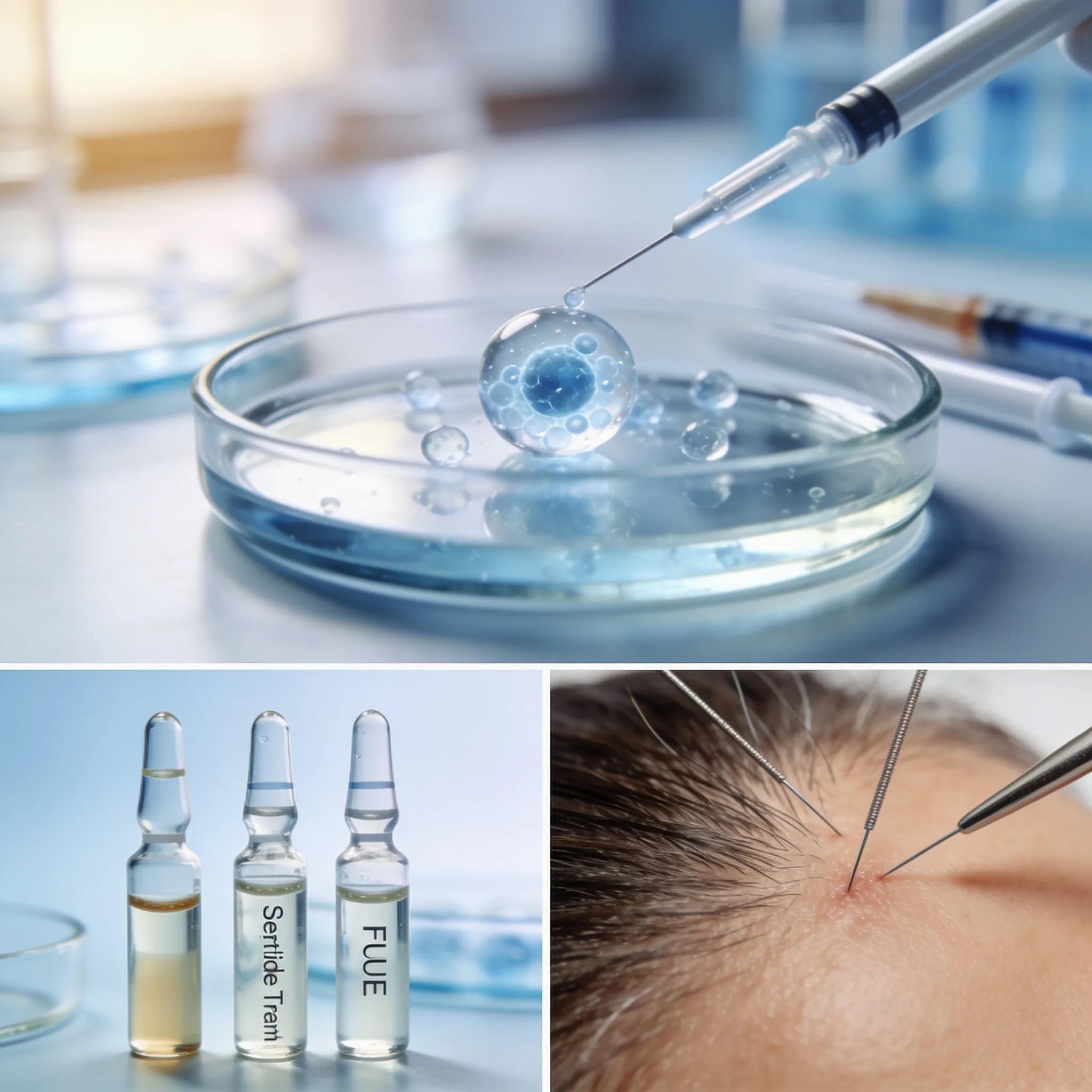
Bal Harbour and Regenerative Medicine: Muse Cells Explained
Medically reviewed by Dr. Charles Pereyra, MD — Medical Director, Springs Rejuvenation. Last reviewed November 16, 2026.
Written by the Springs Rejuvenation regenerative medicine team from direct clinical experience administering stem cell and exosome protocols at our Aventura, Miami center.
Muse cell therapy bal harbour represents a physician-supervised approach to regenerative medicine that uses a specific subset of pluripotent-like cells originally characterized by Kuroda, Dezawa and colleagues in 2010. For residents comparing concierge regenerative offers in Miami, the key distinction lies not in marketing language but in provider licensing, physician-led candidacy screening, and transparent discussion of what the published evidence does and does not yet demonstrate.
What Makes Muse Cell Therapy Different from Standard Stem Cell Approaches?
Most regenerative clinics describe their offerings as "stem cell therapy" without specifying the cell population or delivery mechanism. Muse cells—multilineage-differentiating stress-enduring cells—are a rare population identified by the surface marker SSEA-3 and isolated from adult bone marrow or adipose tissue. Wakao, Dezawa and colleagues (2011) demonstrated that these cells exhibit pluripotent-like behavior, differentiating into cells from all three germ layers under appropriate conditions, a property not shared by standard mesenchymal stem cells.
The homing mechanism also differs. Yamada and colleagues (2018) showed that intravenously delivered Muse cells migrate preferentially to sites of tissue damage via the S1P–S1PR2 signaling axis, a chemotactic pathway activated by sphingosine-1-phosphate released from injured tissue. In their acute myocardial infarction model, labeled cells accumulated at the injury site rather than dispersing systemically—a finding that informs current investigational protocols but does not constitute FDA approval for any specific indication.
Standard MSC therapies often rely on local injection at a target site. Muse cell protocols under investigation deliver cells intravenously, relying on intrinsic homing rather than operator-dependent placement. This distinction matters when evaluating provider claims: a clinic offering "stem cells" without specifying cell type, homing data, or the peer-reviewed basis for its protocol is not operating from the same evidence base as one that cites Yamada (2018) or the first-in-human Japanese safety study conducted by Noda and colleagues (2020).
How Does Muse Cell Therapy Bal Harbour Work?
Physician-supervised Muse cell therapy in Miami begins with candidacy screening, not a sales pitch. Dr. Charles Pereyra, MD, a board-certified emergency medicine physician, reviews medical history, prior imaging, and recent laboratory work to determine whether the investigational therapy aligns with a patient's condition and expectations. Patients whose imaging shows structural issues beyond the scope of cell-based intervention, or whose expectations include certain outcomes, are declined at this stage—a practice that distinguishes physician-led programs from commission-driven sales models.
For accepted candidates, the process involves an intravenous infusion of culture-expanded Muse cells. The cells are sourced from screened donors, expanded under controlled conditions, and tested for viability and marker expression before release. The infusion itself resembles an IV vitamin drip and typically takes thirty to sixty minutes. No sedation or surgical incision is required.
The investigational mechanism—based on the homing data published by Yamada (2018)—holds that circulating Muse cells detect damage-associated signals and migrate to those tissues, where they may differentiate and support repair. Noda and colleagues (2020) evaluated this in a first-in-human Japanese safety study, enrolling a small cohort and monitoring for adverse events over six months. The trial reported no serious safety signals attributable to the cells, but the study was not powered to demonstrate efficacy, and the authors noted variability in individual responses.
A subsequent randomized, double-blind Japanese trial conducted by Niizuma and colleagues (2023) enrolled a larger cohort and tracked outcomes over twelve months. The primary endpoint showed modest benefit, and not every participant responded. These studies form the foundation for investigational use but do not constitute FDA approval, and individual responses vary across all patients regardless of mechanism.
Who Is a Candidate for Muse Cell Therapy in Miami?
Candidacy depends on a convergence of factors: the nature of the tissue challenge, the absence of contraindications, realistic expectations, and a willingness to participate in a therapy still considered investigational. Dr. Charles Pereyra evaluates each of these during the initial consultation at the Springs Rejuvenation Miami location.
| Often a Good Fit | Worth a Conversation First |
|---|---|
| Degenerative joint changes confirmed by imaging | Acute injuries requiring immediate surgical intervention |
| Prior conservative therapies (physical therapy, injections) with limited benefit | Active infection or malignancy |
| Understanding that published studies show variable responses | Expectation of certain symptom resolution |
| Willingness to follow post-infusion activity guidelines | Severe systemic illness affecting multiple organ systems |
| Access to follow-up care and monitoring | Pregnancy or planned pregnancy within six months |
Patients who have exhausted conventional options and understand the difference between investigational therapy and FDA-approved standard of care often find the screening conversation clarifying. Those seeking a miracle supports or who resist the idea that some applicants are declined typically do not proceed beyond the first visit.
Who Is NOT a Candidate for This Therapy?
Physician-led screening exists to protect patients from unsuitable interventions. Springs Rejuvenation declines candidates in several categories, a practice that sets credentialed programs apart from revenue-focused operators.
Patients with structural damage requiring mechanical repair—such as a completely torn ligament or a fracture requiring fixation—are referred back to orthopedic surgery. Muse cell therapy is investigational support for degenerative processes, not a substitute for a screw or a suture. Imaging that shows bone-on-bone articulation with complete cartilage loss also prompts a candid discussion: while early-stage degenerative changes may respond to cell-based interventions, end-stage structural failure typically does not.
Perhaps most importantly, unrealistic expectations disqualify otherwise eligible patients. A candidate who insists on certain joint regeneration within thirty days, or who dismisses the physician's explanation that published trials show variable and sometimes modest responses, is not a suitable participant in an investigational therapy. Dr. Pereyra declines those consultations—not because the science is weak, but because the gap between expectation and evidence is too wide to bridge ethically.
What to Expect During the Screening and Delivery Process
The timeline from inquiry to infusion spans three to six weeks, depending on scheduling and laboratory turnaround. The first step is a detailed medical history review, either by telemedicine or in person at the Miami clinic. Dr. Pereyra requests prior imaging (MRI or X-ray), recent lab work, and a written summary of previous interventions. Patients who have not undergone imaging within the past twelve months are asked to obtain updated studies before proceeding.
If the initial review suggests candidacy, the second step is an in-person consultation. This visit includes a physical examination, a discussion of the peer-reviewed evidence (including the null and modest findings from trials like Niizuma 2023), and a transparent review of costs. No deposit is collected until the patient confirms understanding and opts in.
Once a candidate enrolls, the clinic orders donor-matched Muse cells from a licensed laboratory. Culture expansion and quality testing take two to three weeks. The patient receives a scheduled infusion date and pre-infusion instructions: avoid anti-inflammatory medications for seventy-two hours prior, stay well-hydrated, and arrange transportation home.
The infusion itself occurs in a monitored setting. Vital signs are checked before, during, and after the procedure. The patient remains under observation for thirty to sixty minutes post-infusion, then is released with activity guidelines: avoid strenuous exercise for forty-eight hours, maintain hydration, and report any unusual symptoms immediately.
Follow-up occurs at four weeks, twelve weeks, and six months. These visits assess subjective response, repeat imaging where appropriate, and document any adverse events. Not every patient reports improvement, and some experience no detectable change—a reality consistent with the variable outcomes reported in published trials.
Evaluating Muse Cell Providers in Bal Harbour and Greater Miami
The proliferation of regenerative medicine clinics in South Florida makes provider selection challenging. Residents searching for muse cell therapy bal harbour encounter concierge practices, medical spas, and wellness centers, many of which use similar language but operate from different standards.
The first question to ask: Is the program led by a licensed physician who personally evaluates candidacy? A nurse practitioner or health coach conducting the consultation, with a physician signing off remotely, is not the same as direct physician oversight. Dr. Pereyra sees every candidate in person before enrollment, reviews every imaging study, and makes the final decision on suitability—a standard that commission-based sales models do not replicate.
The second question: What specific cell type is being delivered, and what published evidence supports its use? A provider who cannot name the studies—or who cites white papers and company brochures rather than peer-reviewed journals—is not operating from the same evidence base as one that references Kuroda (2010), Yamada (2018), or the Japanese safety trials. Generic "stem cell" language without further specificity is a red flag.
The third question: Does the provider disclose that the therapy is investigational and not FDA-approved? Programs that imply regulatory clearance, or that frame investigational use as equivalent to standard of care, are misrepresenting the legal and evidentiary status of the intervention. Honest providers state clearly that Muse cell therapy is early-stage, that published trials show variable responses, and that individual outcomes cannot be predicted.
The fourth question: Does the provider decline some applicants? A clinic that accepts every patient who can pay is optimizing for revenue, not for clinical appropriateness. Springs Rejuvenation turns away candidates whose imaging shows end-stage structural damage, whose expectations are unrealistic, or whose medical history suggests higher risk than potential benefit. This gatekeeping function is what distinguishes physician-led regenerative medicine from wellness-industry marketing.
Finally: Are you required to travel overseas, or is physician-supervised therapy available in the United States? While some investigational protocols remain restricted to foreign clinics, Muse cell therapy is offered by credentialed US providers, eliminating the logistical and legal risks of medical tourism. The Springs Miami location serves Bal Harbour, Surfside, and surrounding communities without requiring international travel.
Is Muse Cell Therapy FDA-Approved?
No. Muse cell therapy remains investigational in the United States and is not approved by the FDA for any specific indication. The safety studies conducted by Noda (2020) and the efficacy trial by Niizuma (2023) were conducted in Japan under different regulatory frameworks. US-based use occurs under physician discretion for individual patients, a legal pathway distinct from FDA approval. Patients should understand that investigational status means the evidence base is still developing and that long-term outcomes are not yet fully characterized.
What Does the Evidence NOT Show Yet?
Published trials to date have enrolled relatively small cohorts, tracked outcomes over six to twelve months, and reported variable responses. The literature does not yet demonstrate predictable, uniform benefit across all patient populations, nor does it establish optimal dosing, timing, or repeat-infusion protocols. The Niizuma (2023) trial's primary endpoint showed modest improvement, and a subset of participants experienced no detectable change. These realities are consistent with early-stage investigational therapies and underscore the importance of realistic expectations.
How Is This Different from Exosome Therapy?
Exosomes are cell-free vesicles secreted by stem cells, containing signaling molecules but no living cells. Muse cell therapy delivers viable, pluripotent-like cells capable of homing to damaged tissue and differentiating in situ, based on the mechanisms described by Yamada (2018). Exosome therapy relies on paracrine signaling without cell engraftment. Both are investigational, but the biological mechanism and published evidence base differ. Clinics offering both should explain these distinctions rather than supporting them as interchangeable products.
Can I Combine Muse Cell Therapy with Other Regenerative Approaches?
Combination protocols—such as platelet-rich plasma followed by Muse cell infusion—are sometimes proposed, but the published evidence for synergistic benefit remains limited. Gentile and Garcovich (2019) reviewed PRP for androgenetic alopecia and found modest support, while Shin and colleagues (2015) evaluated adipose-derived stem cell conditioned media in a small hair-restoration study. Combining investigational therapies introduces additional variables and may complicate the interpretation of outcomes. Dr. Pereyra evaluates such requests on a case-by-case basis, weighing theoretical rationale against the lack of controlled trial data for combination use.
Medical Disclaimer: Stem cell and exosome therapy is not an FDA approved therapy and is considered to be in the experimental stages. These statements have not been evaluated by the FDA and are not intended to diagnose, treat, cure, or prevent any disease. Springs Rejuvenation processes exosomes in an FDA approved lab. Individual results may vary. This content is reviewed for medical accuracy by Dr. Charles Pereyra, MD, Medical Director of Springs Rejuvenation, and is provided for educational purposes only. Always consult a qualified physician.