
Aventura Patients and Muse Cell Research: Candidacy Explained
Medically reviewed by Dr. Charles Pereyra, MD — Medical Director, Springs Rejuvenation. Last reviewed October 15, 2026.
Written by the Springs Rejuvenation regenerative medicine team from direct clinical experience administering stem cell and exosome protocols at our Aventura, Miami center.
Residents of Aventura and the surrounding north Miami-Dade communities increasingly ask about investigational regenerative approaches that do not require international travel. Among these, Muse cell therapy has drawn interest because published research suggests these rare cells may home to areas of tissue need when delivered intravenously. Understanding who may be screened in—and who should wait—requires familiarity with the underlying science, the published evidence, and the physician-led evaluation process that every candidate undergoes.
What Are Muse Cells?
Muse cells, or multilineage-differentiating stress-enduring cells, were first characterized by Kuroda, Dezawa and colleagues in a 2010 PNAS publication. The team identified a small population of pluripotent-like cells in adult bone marrow and connective tissue, marked by the surface antigen SSEA-3. Unlike conventional stem cells, Muse cells survive prolonged low-serum stress in culture and can differentiate into cells representative of all three embryonic germ layers—ectoderm, mesoderm and endoderm—without forming tumors.
A key discovery came when Yamada and colleagues (2018) demonstrated that intravenously administered Muse cells appear to follow a molecular guidance system involving the sphingosine-1-phosphate receptor axis. In preclinical models, circulating Muse cells migrated preferentially to sites of tissue injury rather than dispersing randomly. This homing mechanism is central to the rationale for intravenous delivery, though individual responses in human recipients remain under investigation and are not uniform.
Who Is Screened In for Muse Cell Therapy Aventura
Dr. Charles Pereyra, the medical director at the Springs Miami location, evaluates candidates seeking muse cell therapy aventura on the basis of medical history, current condition and realistic goals. Screening typically includes patients exploring regenerative support for joint discomfort, hair thinning consistent with androgenetic alopecia, or broader longevity and tissue-maintenance objectives. Because the therapy is investigational and not approved by the Food and Drug Administration, every candidate receives a thorough explanation of what the published literature does—and does not—support.
Joint candidates may include individuals with early to moderate degenerative changes who have not found lasting relief from conventional approaches. While small studies have explored mesenchymal stem cells and related modalities in musculoskeletal contexts, robust randomized trials specific to Muse cells in joints remain limited. Hair-restoration candidates often reference reviews such as Gentile and Garcovich (2019), which examined platelet-rich plasma and growth-factor-rich preparations for androgenetic alopecia, or the small pilot by Shin and colleagues (2015) using adipose-derived stem cell conditioned media. The evidence base is early-stage, and individual hair responses vary widely.
Longevity-focused candidates seek support for cellular repair and tissue maintenance as part of a broader health strategy. Published trials have examined intravenous mesenchymal stem cells in a variety of contexts. For example, a first-in-human Japanese safety study (Noda and colleagues, 2020) evaluated intravenous Muse cell infusion and reported no serious adverse events, though efficacy endpoints were preliminary. A randomized double-blind trial in Japan (Niizuma and colleagues, 2023) examined similar cells and found modest outcomes that did not reach statistical significance on all primary measures—a reminder that the literature is not uniformly positive. Hare and colleagues (2009) published a randomized trial in JACC assessing the safety of intravenous allogeneic mesenchymal stem cells, and Bartolucci and colleagues (2017) reported improvements in left ventricular ejection fraction in a small cohort receiving umbilical-cord mesenchymal stem cells, with an average gain of approximately seven points. These studies contribute to the scientific foundation but do not constitute FDA approval, and individual responses vary.
Who Should Wait
Dr. Charles Pereyra emphasizes that candidacy is not a binary yes-or-no determination. Some patients benefit from optimizing baseline health—addressing nutritional deficiencies, managing inflammation, improving sleep—before considering any investigational approach. Others may find that their goals are better served by conventional interventions or by participating in formal clinical trials where data collection is rigorous and endpoints are predefined.
The Evaluation Process in Miami
The Springs Miami facility conducts in-person consultations during which medical history, laboratory work and imaging (when relevant) are reviewed. Candidates discuss the mechanism of action, the published studies, the limitations of current evidence, and realistic timelines. Because Muse cell therapy is administered intravenously, vascular access and tolerance of infusion procedures are assessed. The physician explains that while preclinical models suggest homing to injured tissue, human data remain investigational, individual variability is high, and some recipients report minimal perceptible change.
Cost, logistics and follow-up are addressed transparently. Patients are informed that this is not an FDA-approved intervention, that insurance does not typically cover investigational therapies, and that additional sessions may or may not be recommended based on initial response. For Aventura residents and others in north Miami-Dade, proximity to the Miami clinic offers access to physician-supervised Muse cell therapy without the need to travel overseas, where regulatory oversight and product sourcing may differ.
How Muse Cell Therapy Aventura Fits Into a Broader Strategy
Few candidates pursue Muse cell therapy in isolation. Joint patients often combine the intervention with physical therapy, anti-inflammatory nutrition and weight management. Hair patients may use topical minoxidil, low-level light therapy or platelet-rich plasma in conjunction with or independent of cell-based approaches. Longevity patients typically view Muse cells as one component of a multifaceted plan that includes hormone optimization, metabolic monitoring and exercise.
The investigational nature of the therapy means that outcomes are tracked, documented and discussed in follow-up visits. Some patients report subjective improvements in energy, recovery or hair density; others notice little change. The published literature, including the modest findings in the Niizuma stroke trial and the absence of large-scale randomized controlled trials in hair or joint applications, underscores that this is an evolving field rather than a proven standard of care.
What Questions Should Aventura Candidates Ask?
What does the published research actually show about Muse cells?
The foundational work by Kuroda and Dezawa (2010) established that Muse cells exist and possess pluripotent-like characteristics. Yamada and colleagues (2018) demonstrated a homing mechanism in animal models. Human safety data have been published in small trials, including Noda (2020) and Niizuma (2023), but efficacy endpoints remain preliminary or mixed. No large-scale randomized controlled trial has confirmed clinical benefit in joint, hair or general longevity applications, and the FDA has not approved Muse cell products for any indication.
How does a physician determine if I am a candidate?
Dr. Charles Pereyra reviews your medical history, laboratory values, imaging when applicable, and your stated goals. Exclusions include active infection, malignancy, pregnancy and certain immunosuppressive regimens. The evaluation also assesses whether your expectations align with what early-stage evidence supports. Candidates seeking certain outcomes or viewing Muse cells as a replacement for all conventional care are counseled on the limitations and investigational status of the approach.
Why consider Muse cell therapy in Miami rather than traveling internationally?
Physician-supervised Muse cell therapy is available at the Springs Miami location, offering Aventura residents access without the logistical, financial and regulatory uncertainties of overseas travel. Clinics abroad may operate under different oversight frameworks, and product sourcing, preparation and dosing practices vary. Staying local allows for continuity of care, transparent discussion of the evidence, and follow-up within a familiar healthcare environment, though it does not change the investigational nature of the intervention.
What happens if I don't respond?
Individual variability is a hallmark of all investigational therapies. Some candidates report no perceptible benefit, a reality reflected in the mixed outcomes of published trials. If initial infusion produces minimal change, the physician may discuss whether a second session is scientifically justified, whether baseline factors (nutrition, inflammation, concurrent medications) should be optimized first, or whether alternative approaches are more appropriate. Non-response does not indicate failure on the patient's part; it reflects the early stage of the science and the complexity of human biology.
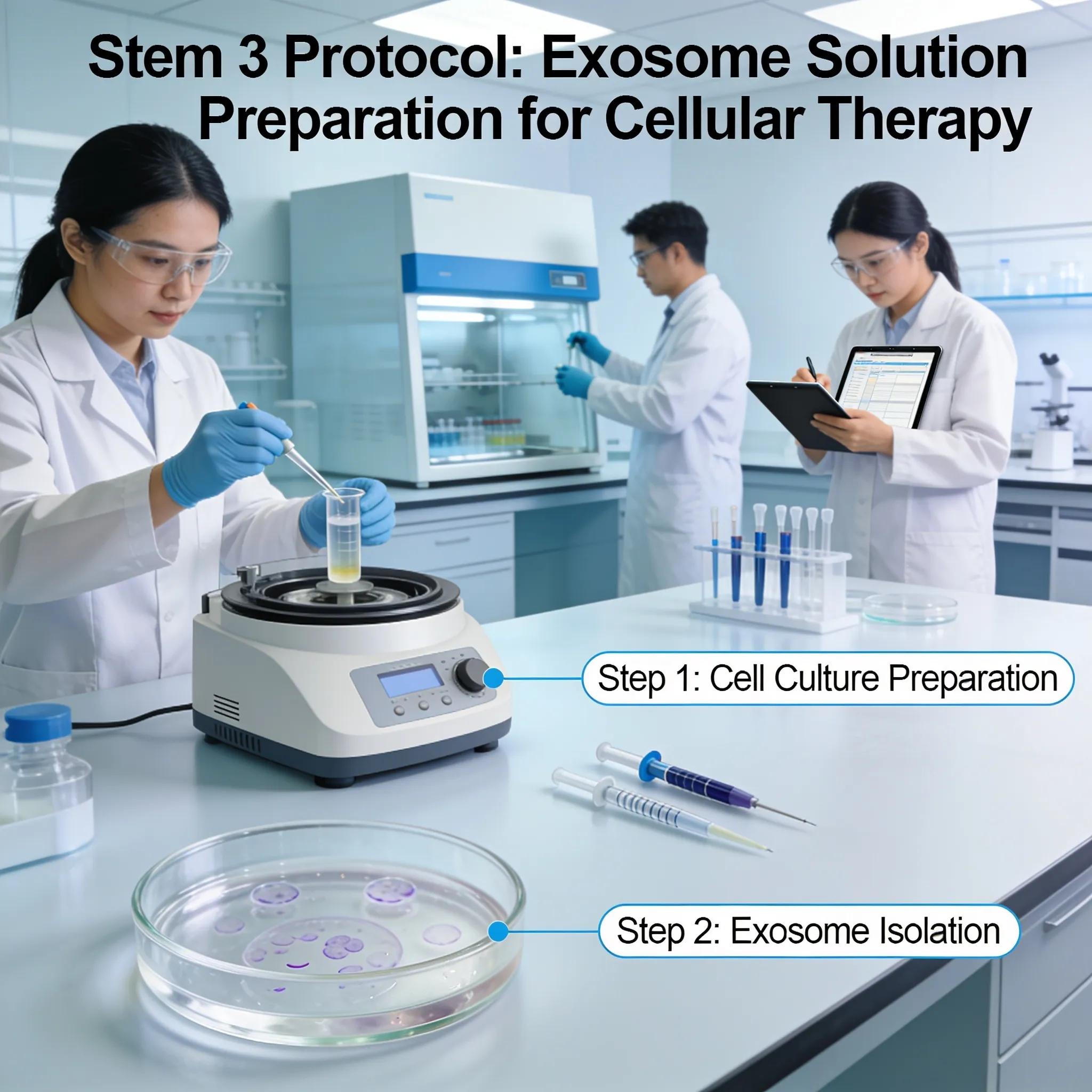
At Springs Rejuvenation, stem cell and exosome therapies are used together as part of a personalized regenerative protocol.
Medical Disclaimer: Stem cell and exosome therapy is not an FDA approved therapy and is considered to be in the experimental stages. These statements have not been evaluated by the FDA and are not intended to diagnose, treat, cure, or prevent any disease. Springs Rejuvenation processes exosomes in an FDA approved lab. Individual results may vary. This content is reviewed for medical accuracy by Dr. Charles Pereyra, MD, Medical Director of Springs Rejuvenation, and is provided for educational purposes only. Always consult a qualified physician.