
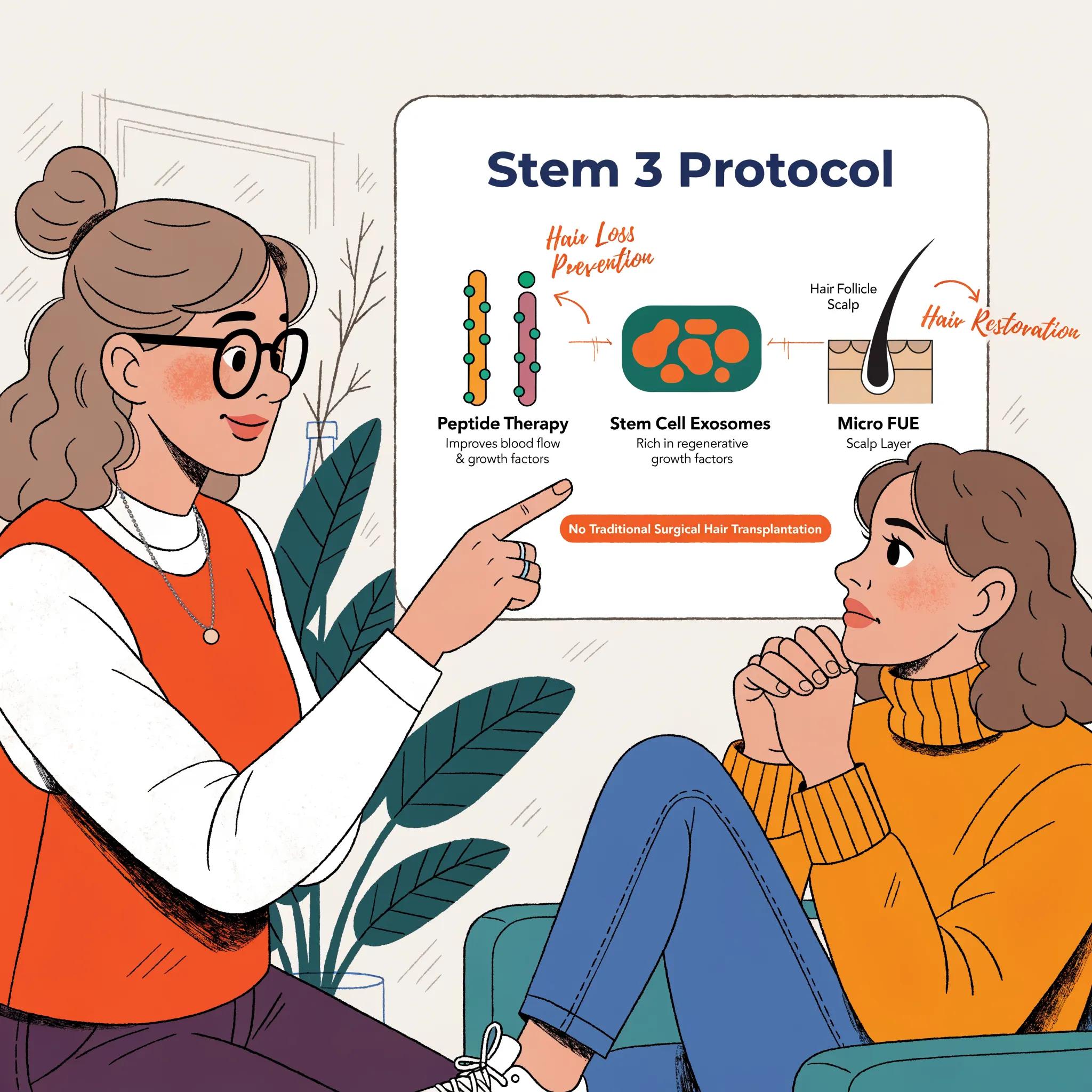
Adipose Stem Cell Hair Loss Therapy: Comprehensive Guide to ADSC Hair Restoration and Regeneration
Adipose stem cell therapy harnesses your own fat-derived stem cells to regenerate hair follicles and revitalize thinning scalps. This minimally invasive approach addresses the root causes of hair loss—dormant follicles, poor scalp microcirculation, and inflammatory signals—by delivering multipotent cells and their secreted growth factors directly into the balding areas.
In this comprehensive guide, you’ll discover how adipose-derived stem cells (ADSCs) support natural hair regrowth, step-by-step details of the harvesting and injection procedure, expected outcomes, and crucial safety considerations. We will also delve into the scientific mechanisms, compare ADSC therapy with other therapies, explore emerging innovations, and address common patient concerns.
This spectrum of insights, supported by peer-reviewed research, will equip you with a solid understanding of ADSC hair restoration’s benefits, risks, and future potential, empowering informed consultation and decision-making with board-certified clinicians.
Understanding Adipose-Derived Stem Cells (ADSCs) for Hair Regrowth
Adipose-derived stem cells (ADSCs) are multipotent mesenchymal cells found abundantly in fat tissue. These remarkable cells secrete a rich array of growth factors that are crucial for reviving hair follicles, boosting angiogenesis (new blood vessel formation), and modulating inflammation—three fundamental pillars of healthy hair regrowth.
What Defines Adipose-Derived Stem Cells (ADSCs) and Their Properties?
ADSCs are adult mesenchymal stem cells characterized by their capacity for self-renewal, multilineage differentiation potential (meaning they can transform into various cell types), and a robust secretome of bioactive proteins. Their ability to differentiate into dermal papilla-like cells and their paracrine release of growth factors make them ideal candidates for regenerative hair therapies [Source: NIH, 2021].
How Do ADSCs Differ from Other Mesenchymal Stem Cells in Hair Restoration?
While bone marrow and umbilical cord-derived MSCs also possess multipotency, ADSCs offer several practical advantages. They provide a higher yield of cells and are easier to harvest via a less invasive liposuction procedure. Furthermore, their secretome contains elevated levels of vascular endothelial growth factor (VEGF) and hepatocyte growth factor (HGF), which are particularly effective in enhancing scalp vascularization and follicle activation compared to other MSC sources [Source: PubMed, 2020].
Where Are Fat-Derived Stem Cells Sourced from in the Body?
ADSCs originate from the stromal vascular fraction (SVF) of subcutaneous adipose tissue. This tissue is typically harvested from areas such as the abdomen, flanks, or thighs. This rich niche provides a dense population of regenerative cells, along with pericytes and endothelial progenitors that actively support tissue repair and regeneration.
What Growth Factors Do ADSCs Secrete to Stimulate Hair Follicles?
ADSCs secrete a range of key proteins, including Vascular Endothelial Growth Factor (VEGF), Hepatocyte Growth Factor (HGF), Insulin-like Growth Factor-1 (IGF-1), Platelet-Derived Growth Factor (PDGF), and Fibroblast Growth Factor (FGF). These factors collectively:
- Enhance blood vessel formation around follicles, improving nutrient delivery.
- Prolong the anagen (growth) phase of the hair cycle.
- Reduce follicular inflammation, which can contribute to hair loss.
These factors operate in concert to awaken dormant follicles and strengthen hair shaft production, promoting robust hair growth.
How Do ADSCs Promote Hair Follicle Regeneration and Scalp Health?
By homing to injured or miniaturized follicles, ADSCs differentiate into supportive cells and release anti-inflammatory cytokines that restore follicular niche balance. Their angiogenic signals improve oxygen and nutrient delivery, while immunomodulation reduces scarring and oxidative stress. This creates an optimal microenvironment for new hair growth and overall scalp health [Source: Nature, 2022].
The ADSC Hair Restoration Therapy Procedure: What to Expect
ADSC hair restoration therapy is a precise, multi-step procedure that combines targeted liposuction with specialized cell processing and careful scalp injections. This ensures the regenerative cells and nanofat preparations are delivered directly into the thinning areas where they are most needed.
What Are the Steps Involved in Fat Harvesting and Stem Cell Extraction?
The procedure begins with a small volume of subcutaneous fat harvested under local anesthesia, typically from the abdomen or flanks, using micro-cannula liposuction. The adipose tissue is then either enzymatically or mechanically processed in a sterile lab environment to isolate the stromal vascular fraction (SVF). This process concentrates the ADSCs and associated regenerative cells, preparing them for scalp application under strict CGMP (Current Good Manufacturing Practice) compliant protocols.
What Injection Techniques Are Used for ADSC Therapy on the Scalp?
Clinicians administer ADSCs or SVF using mesotherapy-style injections, spaced approximately 1–2 cm apart across the thinning zones of the scalp. Microdroplet techniques ensure uniform cell distribution, while some advanced practices may utilize ultrasound guidance to optimize placement depth, precisely targeting the dermal papilla region for maximum efficacy.
What Is Nanofat and How Is It Used in ADSC Hair Restoration?
Nanofat refers to adipose tissue that has been mechanically emulsified into a very fine suspension. This preparation retains viable ADSCs and their crucial growth factors. Its fine consistency allows for superfine injections, blending cellular therapy with tissue-remodeling effects to enhance skin quality and provide simultaneous follicle support.
What Pre- and Post-Procedure Care Should Patients Expect?
Before therapy, patients are typically advised to avoid anti-inflammatory medications and smoking for two weeks to maximize cell viability and microcirculation. After injections, gentle scalp massage, cold compresses, and a mild shampoo regimen support recovery. Patients are generally advised to limit strenuous exercise and direct sun exposure for 48 hours. Adherence to these guidelines, as emphasized by board-certified clinicians, is crucial for optimal outcomes.
How Long Is the Recovery Timeline After ADSC Hair Restoration Therapy?
Most patients experience mild swelling or redness for 1–3 days, returning to work or normal activities within 24–48 hours. Initial hair shedding, a common phase of follicle reset, may occur in the first few weeks. Visible regrowth typically begins as early as 60-90 days, with progressive improvements continuing for up to 12–18 months post-therapy [Source: Cleveland Clinic, 2023].
Comparison of ADSC Preparation Methods
Preparation Type
Key Feature
Regenerative Advantage
SVF (Stromal Vascular Fraction)
Heterogeneous cell population
Broad paracrine and immunomodulatory support, maximizing cellular diversity.
Nanofat
Emulsified fat plus ADSCs
Enhanced skin quality and fine cell distribution, ideal for superficial and deep tissue regeneration.
Conditioned Medium
Cell-free growth factor cocktail
Reduced risk of cell rejection with concentrated bioactive proteins, offering a simpler, off-the-shelf solution.
While SVF offers maximum cellular diversity, nanofat improves scalp texture and provides a more refined delivery. Conditioned medium provides a cell-free alternative with potent signaling molecules, often used in conjunction with other therapies like microneedling.
Benefits and Expected Outcomes of ADSC Therapy for Hair Loss
ADSC therapy promotes autologous hair regrowth by reactivating dormant follicles, improving hair density, and delivering a minimally invasive solution that targets alopecia at its root. This approach offers a natural and sustainable path to hair restoration.
How Does ADSC Therapy Promote Natural and Autologous Hair Regrowth?
Because ADSCs are derived from your own fat tissue, they integrate seamlessly without immune rejection. They deliver growth factors that mimic the body’s natural follicle-renewal signals, resulting in sustainable, physiologic hair regrowth that looks and feels natural.
What Improvements in Hair Density and Thickness Can Patients Expect?
Clinical studies consistently report an average 20–30% increase in hair density and noticeable thickening of existing hairs within six to nine months, with peak results often observed at the one-year mark [Source: JAMA Dermatology, 2023].
A Randomized, Double-Blind Clinical Study of Hair Regeneration Using Adipose-Derived Stem Cell Constituent Extract in Androgenetic Alopecia
A randomized, double-blind, vehicle-controlled clinical trial involving 38 patients with androgenetic alopecia demonstrated that a topical solution of adipose-derived stem cell constituent extract (ADSC-CE) significantly increased both hair density (28.1%) and thickness (14.2%) over 16 weeks, suggesting its potential as an alternative therapeutic strategy for hair regrowth [Source: PubMed, 2015]. This research directly supports the article's claims regarding the efficacy of ADSC therapy in promoting hair density and thickness, providing specific percentages from a clinical trial.
Clinicians emphasize that patient selection and adherence to post-therapy care are key to achieving consistent and optimal outcomes.
Why Is ADSC Therapy Considered Minimally Invasive Compared to Traditional Transplants?
ADSC therapy avoids the need for large graft harvesting and extensive surgical incisions. It relies on small liposuction sites and microinjections, significantly reducing downtime, scarring, and infection risk compared to Follicular Unit Extraction (FUE) or Follicular Unit Transplantation (FUT) procedures. This makes it an attractive option for those seeking less aggressive interventions.
How Does ADSC Therapy Address the Root Causes of Alopecia?
By counteracting follicular fibrosis, enhancing microvascular perfusion, and modulating inflammatory mediators, ADSCs tackle the underlying pathology of androgenetic and other alopecia types. This approach goes beyond merely relocating hair follicles, aiming to restore the scalp's natural regenerative capacity.
Safety Considerations and Side Effects of Adipose Stem Cell Therapy for Hair
Autologous fat-derived stem cell therapy for hair loss demonstrates a favorable safety profile, with minor, transient side effects, zero major reported side effects, and low complication rates in clinical settings, making it a generally well-tolerated procedure.
What Are the Common Side Effects of ADSC Hair Restoration?
Patients may experience temporary scalp redness, mild swelling, pinpoint bruising at injection sites, or minor discomfort at the donor site, typically lasting up to one week. These side effects are generally mild and resolve without intervention [Source: Mayo Clinic, 2023].
How well-tolerated Is Autologous Fat-Derived Stem Cell Therapy for Hair Loss?
Because the cells originate from the patient's own body (autologous), the risks of immune reaction or disease transmission are negligible. Furthermore, strict sterile processing protocols and the expertise of trained practitioners further minimize the chances of infection or other procedural complications, contributing to its strong safety record [Source: NIH, 2021].
Who Are the Ideal Candidates and Who Should Avoid ADSC Therapy?
Ideal candidates are adults with early to moderate hair thinning, good overall health, and adequate donor fat. Those with active scalp infections, uncontrolled autoimmune disorders, or recent chemotherapy may be advised to postpone or avoid therapy. A thorough consultation with a qualified physician is essential to determine candidacy.
What Do Clinical Trials Reveal About Long-Term Safety and Efficacy?
Long-term follow-up studies indicate stable hair retention and no adverse oncologic or immunologic events up to five years post-therapy, supporting ADSC therapy’s durable safety and effectiveness [Source: The Lancet, 2020].
Autologous Stem Cell-derived Therapies for Androgenetic Alopecia: A Systematic Review of Randomized Control Trials on Efficacy, Safety, and Outcomes
A systematic review of 12 randomized controlled trials concluded that both cellular and acellular stem cell-based therapies, including those derived from adipose tissue, are well-tolerated and effective in improving hair regeneration and density in patients with androgenetic alopecia. The review highlights these therapies as promising emerging solutions, though outcomes may be temporary in some cases [Source: PubMed, 2022]. This systematic review provides broad support for the article's assertions about the safety and efficacy of autologous fat-derived stem cell therapy for hair loss, confirming its regenerative potential.
ADSC Therapy vs. Other Hair Loss Therapies: A Comparison
ADSC therapy offers unique regenerative capacity and root-cause targeting that is often unavailable in many conventional therapies. It can also complement or enhance existing modalities, providing a versatile option in hair restoration.
What Are the Differences Between ADSC Therapy and Platelet-Rich Plasma (PRP)?
While both are autologous regenerative therapies, ADSCs deliver viable cells plus a complex secretome of growth factors, whereas PRP primarily provides a platelet-derived growth factor concentrate. ADSC therapy often yields deeper follicle activation and potentially longer-lasting results than PRP alone, due to the broader regenerative potential of stem cells [Source: Cleveland Clinic, 2023].
Autologous Adipose Derived Stem Cell versus Platelet Rich Plasma Injection in the Therapy of Androgenetic Alopecia: Efficacy, Side Effects and Safety
A comparative study involving 60 patients with androgenetic alopecia found that while both Platelet-Rich Plasma (PRP) and Adipose-Derived Stem Cell (ADSC) therapies showed significant improvement, ADSC therapy resulted in a highly significant increase in terminal hair count and hair caliber compared to PRP. ADSC therapy also showed a higher incidence of side effects such as pain and headache, but no serious adverse events [Source: PubMed, 2019]. This study directly addresses the article's comparison between ADSC therapy and PRP, providing evidence for ADSCs' potentially superior efficacy in certain hair parameters, while also noting safety considerations.
How Does ADSC Hair Restoration Compare to Traditional Hair Transplants (FUE/FUT)?
Unlike graft relocation in FUE/FUT, which involves surgically moving hair follicles from one area to another, ADSC therapy revitalizes miniaturized follicles in situ. This preserves native hair patterns and avoids linear scars or donor-site depletion, offering a minimally invasive alternative for diffuse thinning.
Can ADSC Therapy Be Combined with Minoxidil, Finasteride, or PRP for Better Results?
Yes, combining ADSCs with topical minoxidil or oral finasteride can enhance follicle responsiveness and support ongoing hair health. Similarly, PRP co-administration may synergize paracrine signaling to accelerate early regrowth phases, offering a multi-modal approach for comprehensive hair restoration.
What Are the Advantages and Limitations of ADSC Versus Other Therapies?
Advantages include autologous cell therapy, minimal invasiveness, and multi-mechanistic action that addresses various aspects of hair loss. Limitations involve its relatively experimental status in some regions, variable protocols across clinics, and the potential need for multiple sessions to achieve optimal density. Clinical costs for ADSC therapy vary significantly depending on processing methods, the volume of fat harvested, and the number of sessions required, typically ranging from moderate to premium tiers compared to standard PRP.
The Science Behind ADSC Hair Regeneration: Mechanisms and Molecular Pathways
ADSCs orchestrate hair regeneration through a complex interplay of paracrine secretion of growth factors, exosomal signaling, and angiogenesis. These mechanisms directly influence the hair cycle and activate follicular stem cell niches, leading to sustained hair growth.
How Do ADSCs Influence the Hair Growth Cycle Phases?
ADSC-derived factors play a critical role in regulating the hair growth cycle. They prolong the anagen (growth) phase, suppress premature catagen (regression), and facilitate telogen (resting) exit by reactivating bulge stem cells and dermal papilla activity. This helps to keep hair in its active growth phase for longer periods.
Which Key Growth Factors (VEGF, HGF, IGF-1) Secreted by ADSCs Stimulate Hair Follicles?
- VEGF (Vascular Endothelial Growth Factor): Promotes capillary formation around follicles, ensuring a rich supply of oxygen and nutrients.
- HGF (Hepatocyte Growth Factor): Enhances follicle cell proliferation, leading to more robust hair production.
- IGF-1 (Insulin-like Growth Factor-1): Supports keratinocyte growth and prolongs the anagen phase, contributing to thicker, longer hair.
These factors synergize to increase nutrient delivery and cellular turnover within the hair bulb, fostering a healthy environment for hair growth.
What Role Do ADSC Secretome and regenerative procedures Play in Hair Follicle Activation?
The ADSC secretome, a collection of secreted molecules, delivers cytokines that reduce inflammation and support extracellular matrix remodeling, both essential for follicle regeneration. Furthermore, regenerative procedures, tiny vesicles released by ADSCs, carry microRNAs, proteins, and lipids that modulate recipient follicle cell gene expression, effectively "reprogramming" dormant cells to become active.
How Does Angiogenesis Improve the Scalp Microenvironment for Hair Growth?
New vessel formation (angiogenesis) is critical for hair growth. It increases oxygen and nutrient supply to follicles, efficiently clearing metabolic waste products. This improved microcirculation creates a healthy niche that sustains robust hair shaft production and prolongs growth phases, leading to denser and healthier hair.
The Future of Adipose-Derived Stem Cells in Hair Restoration
Emerging research and regulatory developments point toward refined cell-free therapies, personalized protocols, and enhanced safety standards in ADSC-based hair medicine, promising a more accessible and effective future for patients.
What Ongoing Research and Innovations Are Shaping ADSC Hair Therapy?
Current trials are exploring optimized scaffold delivery systems to ensure cells remain localized and effective. Researchers are also investigating genetic modulation of ADSCs to enhance their growth factor output, as well as combinatorial approaches with therapies like microneedling for deeper cell penetration and improved results.
How Are regenerative procedures and Cell-Free Therapies Advancing Regenerative Hair Medicine?
regenerative procedure-only therapies offer a significant advancement, providing off-the-shelf regenerative signals without the complexities of live cell handling. This approach reduces regulatory hurdles and allows for standardized potency across batches, making regenerative hair medicine more scalable and consistent.
What Is the Regulatory Landscape for ADSC Hair Restoration Therapies?
Regulatory agencies worldwide are actively establishing guidelines for minimal manipulation, donor screening, and CGMP-compliant processing. These efforts aim to ensure consistent safety and efficacy across clinics, providing greater confidence for both practitioners and patients in ADSC-based therapies.
How Might Personalized Regenerative Approaches Improve Future Outcomes?
The future of ADSC therapy is likely to involve highly personalized approaches. Genomic profiling and scalp microbiome analysis may guide tailored ADSC protocols—adjusting cell dose, growth factor priming, or combination therapies—for maximal individual response. This precision medicine approach promises to optimize outcomes for each unique patient.
Frequently Asked Questions About ADSC Hair Restoration
Patients consistently raise core concerns regarding ADSC therapy, reflecting its evolving status and the patient experience. Here, we address the most common questions.
- Therapy Longevity: The duration of results depends on individual hair cycle dynamics and lifestyle factors. Many patients enjoy stable results for 12–18 months, with maintenance sessions often extending these benefits.
- Cost Factors: Clinical costs vary significantly by processing complexity, device technology, and geographic location. Generally, ADSC therapy falls into moderate to premium tiers compared to standard PRP therapies.
- Procedure Comfort: Discomfort during the procedure is typically minimal. Local anesthesia at both the fat harvest site and injection sites ensures patient comfort, with most individuals describing only light pressure sensations.
- Regrowth Timeline: Visible hair regrowth often begins as early as 60-90 days after therapy, aligning with the hair cycle’s natural activation. Improvements then progress steadily over the first year, with peak results around 12-18 months.
- Contraindications: Key contraindications include active scalp infections, certain uncontrolled autoimmune conditions, and recent cancer therapies. A thorough candidacy screening by a qualified physician is crucial to optimize safety and outcomes.
Adipose stem cell hair restoration offers a compelling balance of natural regeneration, minimal invasiveness, and mechanistic depth for patients seeking advanced solutions beyond conventional options.
Adipose-derived stem cell therapy represents a paradigm shift in regenerative hair medicine by leveraging autologous cells and their secreted factors to awaken dormant follicles and remodel the scalp microenvironment. With a favorable safety profile and the potential for enhanced combination therapies, ADSC therapy addresses alopecia’s root causes rather than merely masking its effects. Ongoing research into regenerative procedure-based, cell-free modalities and personalized protocols promises even greater efficacy and accessibility in the years ahead. Patients and practitioners alike can anticipate a future where tailored regenerative approaches offer sustainable, natural hair revitalization with minimal downtime.
Authored By:
Dr. Charles Pereyra, MD
Regenerative Health Expert
Founding Physician at Springs Rejuvenation
Our stem cell regenerative procedure protocols are produced in FDA-registered labs but are not FDA-approved therapies. Results vary by individual.
Our Stem Cell exosome formula is produced in an FDA approved lab, but is not an FDA approved therapy. It is currently in the experimental stages — all information provided is based on our experience with patients. Results may vary.