
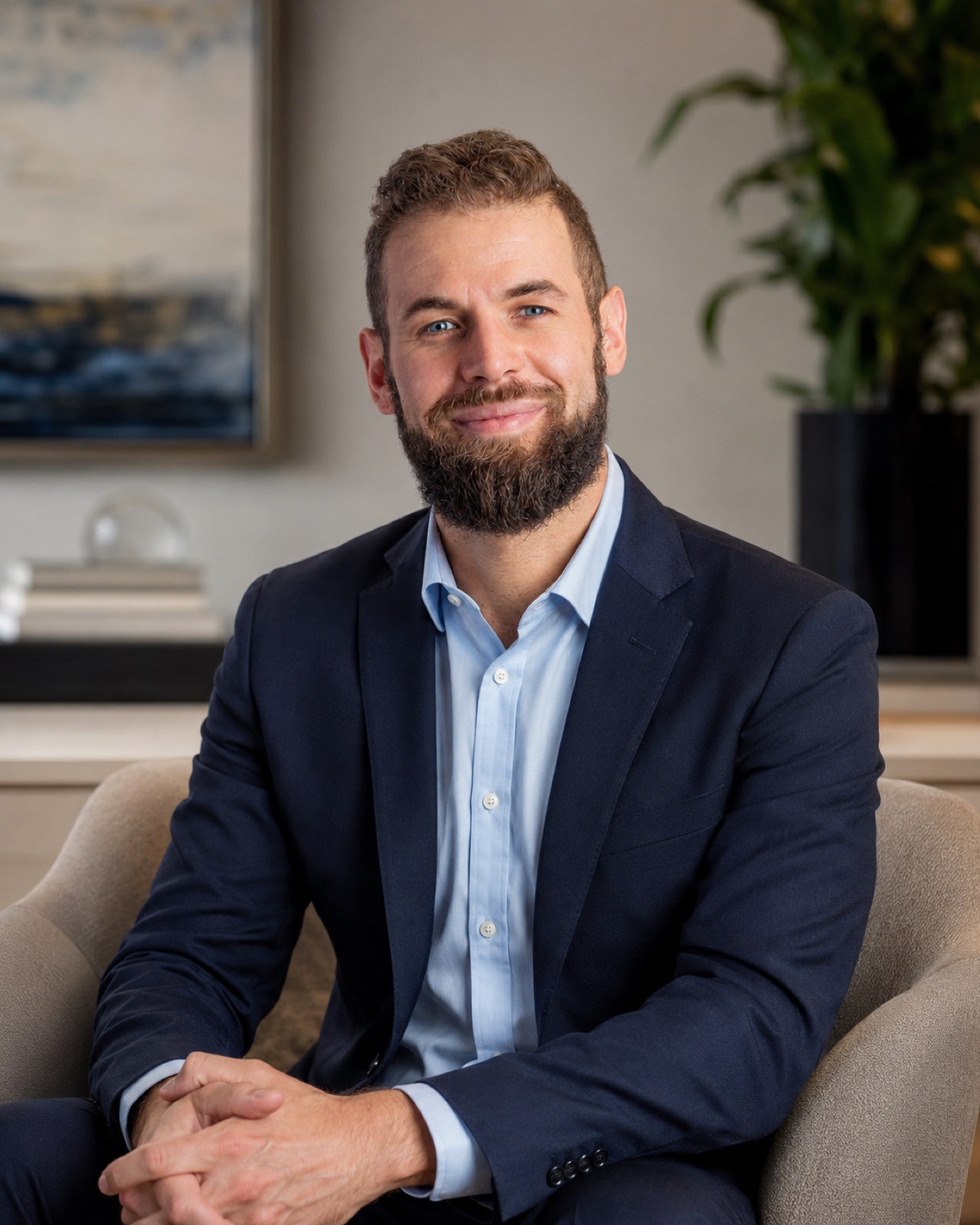
Credentials at a glance
- Residency: Emergency Medicine, NewYork-Presbyterian Brooklyn Methodist Hospital (2016–2019)
- Board certification: Emergency Medicine
- Medical degree: St. George's University School of Medicine (2015)
- Undergraduate: Cornell University, B.S. Biology & Society (2010)
- NPI: 1932553963 (verify on the NPI registry)
- Founded Springs Rejuvenation: 2018 — five centers: Miami (Aventura), New York, Los Angeles, Austin, Atlanta
- Memberships: International Society of Hair Restoration Surgery (ISHRS)
Clinical philosophy: screen first, promise nothing
Dr. Pereyra's training is in emergency and critical care medicine, where the first job is to decide who needs what, and who needs nothing at all. He runs Springs Rejuvenation the same way. Every candidate for a cell-based, exosome or hair restoration protocol is evaluated by a physician before anything is offered, and some are screened out. The practice describes its regenerative protocols as investigational, states that they are not FDA approved, and does not quote outcome figures or promise results. Individual responses vary, and results may vary.
His own hair loss, which began during residency, is why hair restoration became a focus. Springs Rejuvenation introduced a 0.9 mm micro-FUE technique combined with regenerative support, and today performs physician-led hair restoration alongside joint and longevity protocols across five US cities, so patients are not asked to travel overseas for cell-based care.
Peer-reviewed publications (PubMed-indexed)
- An Uncommon Diagnosis in a Child Presenting With Double Vision and Imbalance. Pediatric Emergency Care, 2019. PMID 31335784 · DOI
- Evaluating Complications of Chronic Sinusitis. Case Reports in Emergency Medicine, 2017. PMID 28163938 · DOI
- Streptococcus pneumoniae: A Rare Pathogen in Epidural Abscess. The American Journal of Emergency Medicine, 2016. PMID 26947610 · DOI
Springs Rejuvenation has also prepared two regenerative medicine manuscripts for journal submission: a meta-analysis of published cell-therapy trials and a retrospective hair-density outcomes study. Until a journal accepts them they are described as submitted, not published. Research the practice draws on is summarized on the Research page.
How Dr. Pereyra reads the cell-therapy evidence
The published literature on mesenchymal and Muse cells is mixed, and the practice says so. Early safety work such as Hare and colleagues (2009) and the randomized RIMECARD study (Bartolucci 2017) established that intravenous mesenchymal cells can be delivered to adults in a monitored setting; the Dezawa group's characterization of Muse cells and the Yamada 2018 homing work describe a mechanism, not a proof of benefit. Published Japanese Muse cell trials (Noda 2020, a first-in-human safety study; Niizuma 2023, a randomized double-blind trial) are small and report modest, mixed results. Dr. Pereyra uses this literature to set expectations, not to sell. Where the evidence is thin, the honest answer is "we do not know yet."
Where Dr. Pereyra's team practices
- Miami (Aventura), FL — 2820 NE 214th St, Ste 801
- New York, NY — 245 5th Ave, 3rd Floor, Ste 307
- Los Angeles, CA — 420 E 3rd St, Ste 705
- Austin, TX — 8700 Menchaca Rd, Ste 602
- Atlanta, GA — 1800 Peachtree St NW, Ste 660
Consultations are available at all five centers. See the full clinical team and locations.
Frequently asked questions
Is Dr. Charles Pereyra board certified?
Dr. Pereyra completed an emergency medicine residency at NewYork-Presbyterian Brooklyn Methodist Hospital (2016–2019) and is board certified in emergency medicine. He is a member of the International Society of Hair Restoration Surgery (ISHRS) and is listed in the NPI registry under NPI 1932553963. Regenerative medicine is not a recognized board specialty in the United States; Dr. Pereyra practices it as a physician-led, investigational field and says so plainly in every patient conversation.
What does physician-led screening mean at Springs Rejuvenation?
Every candidate is evaluated by a physician before any protocol is offered. Screening covers medical history, current medications, imaging where relevant, realistic goals and, for hair restoration, pattern and stage of loss. Some candidates are screened out. Individual responses vary and no outcome is promised.
Are the cell-based and exosome therapies at Springs Rejuvenation FDA approved?
No. Stem cell and exosome therapy is not an FDA approved therapy and is considered investigational. Micro-FUE hair transplantation is an established surgical procedure; the regenerative support used alongside it is investigational. Patients receive this disclosure in writing.
Has Dr. Pereyra published peer-reviewed research?
Yes — three peer-reviewed emergency medicine papers indexed on PubMed (2016, 2017, 2019). Springs Rejuvenation has also prepared two regenerative medicine manuscripts (a meta-analysis of published cell-therapy trials and a retrospective hair-density outcomes study) for journal submission; those are described as submitted, not published, until a journal accepts them.
Medical Disclaimer: Stem cell and exosome therapy is not an FDA approved therapy and is considered to be in the experimental stages. These statements have not been evaluated by the FDA and are not intended to diagnose, treat, cure, or prevent any disease. Individual results may vary. Reviewed for medical accuracy by Dr. Charles Pereyra, MD, Medical Director, Springs Rejuvenation.